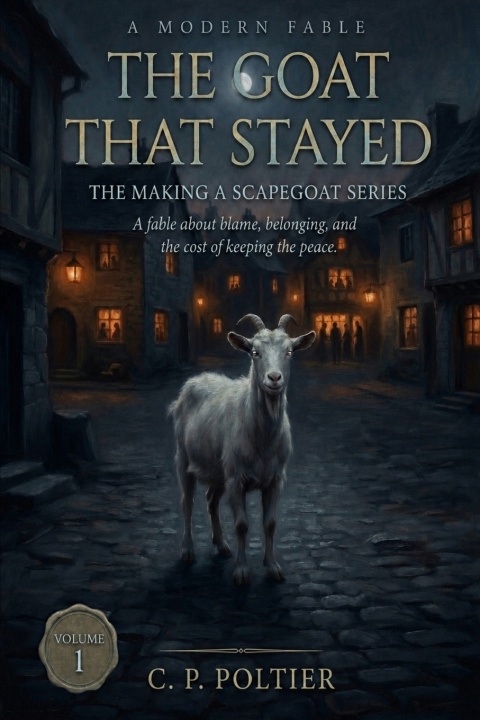
Könyv The Goat That Stayed C. P. Poltier

The Goat That Stayed

A Fable of Burden, Identity, and the Weight We Carry for Others

Szerző: C. P. Poltier
Nyelv: Angol
Kötés: Puha kötésű
Elérhetőség: Beszállítói készleten
Küldés 9-15 napon belül
5 494 Ft
Some roles are not chosen. They are simply waiting when you arrive.In a village of animals that has...

Információk a könyvről

Szerző
Nyelv
Angol
Kötés
Könyv - Puha kötésű
Kiadva
2026
oldal
108
EAN
9798196598838
Enbook ID
52826658
Súly
157
Méretek
152 x 229 x 7

Teljes leírás

Some roles are not chosen. They are simply waiting when you arrive.

In a village of animals that has kept the peace for generations, one Goat has always been there - steady, capable, silent - carrying what the community cannot bring itself to hold. When the harvest fails, when the rains do not come, when something goes wrong that no one can bring themselves to name, the weight finds him. It always has. He has never questioned it. He has, in fact, found something close to purpose in it.

But purpose and rightness are not the same thing. And one autumn, in the long hours of a night that will not give way to sleep, the Goat begins to trace the full shape of the life he has been living - his mother's quiet preparation, the first time he watched an entire room relax the moment he accepted blame, the strange and genuine pride of being the thing a frightened community needed. He is not angry. He is, for the first time, simply honest.

The Goat That Stayed is a fable for anyone who has ever been the dependable one - the one who absorbs, endures, and holds things together while the room breathes easier. It asks the question that the most capable, the most resilient, the most necessary among us are least often asked:

Who gave you this weight - and did you ever have the choice to put it down?

Rendered in the tradition of the moral fable - precise, warm, and quietly devastating - this first volume of The Making a Scapegoat Series is a work of rare psychological honesty. The Goat does not leave. He does not rage. He simply, at last, speaks. And nothing is the same after a thing has been named.