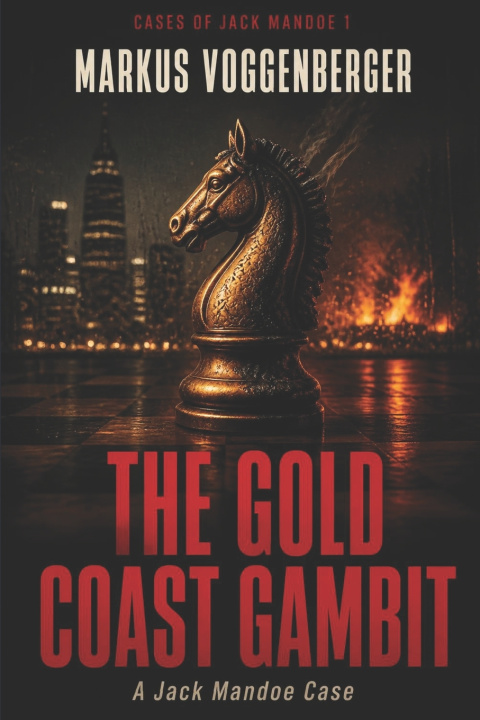
Könyv The Gold Coast Gambit Markus Voggenberger

The Gold Coast Gambit

A Jack Mandoe Case

Nyelv: Angol
Kötés: Puha kötésű
Elérhetőség: Beszállítói készleten
Küldés 10-18 napon belül
6 239 Ft
This novel is an exploration of how deeply we can know another person-and how that knowledge might b...

Információk a könyvről

Nyelv
Angol
Kötés
Könyv - Puha kötésű
Kiadva
2026
oldal
410
EAN
9798185491799
Enbook ID
53243938
Súly
547
Méretek
152 x 229 x 21

Teljes leírás

This novel is an exploration of how deeply we can know another person-and how that knowledge might become a trap. It began with a question that has haunted me for years: what happens when someone brilliant enough to plan the perfect crime encounters someone intelligent enough to see through it? Not as adversaries in the conventional sense, but as two minds that recognize something in each other that neither can quite name or dismiss. The 1980s Chicago of this story provided the perfect landscape for that collision-a city of stark contrasts, where wealth and decay exist in uncomfortable proximity, where institutions fail quietly and individuals take justice into their own hands. Jack Mandoe is a man defined by what he knows and what that knowledge has cost him. As a criminal psychologist, he possesses the rare ability to look into the architecture of a criminal mind and understand not just what someone did, but why-the logic, the wound, the twisted justification that makes violence seem necessary or even righteous. This gift has isolated him. It has also failed him, in ways he has never fully resolved. When he is drawn into the investigation of the arsons, he is not simply solving a puzzle; he is confronting the possibility that understanding evil might not be enough to stop it, and that the person he is chasing may understand him far better than he understands himself. The fires in this novel are not random acts. They are deliberate, choreographed, designed to communicate something to someone. As Jack begins to see the pattern, he realizes that he may be the intended audience. This recognition-that he is not the observer but the observed-sets in motion a psychological unraveling that mirrors the very crimes he is trying to solve. The line between investigator and subject, between control and chaos, between justice and retribution, becomes increasingly uncertain. What follows is a story about the burden of seeing clearly in a world that prefers blindness, and about what we risk when we look too deeply into darkness. It is also a story about the possibility of redemption-not as a neat resolution, but as the hard, uncertain work of confronting what we have failed to prevent and what we might yet understand about ourselves.