Halloween: A Critical Analysis of the Film That Defined the Slasher Genre
When Halloween was released in 1978, it didn't rely on gore or spectacle. Instead, it used silence, atmosphere, and fear of the unseen to permanently reshape horror cinema.
With Halloween, John Carpenter didn't just make a movie, he created the blueprint for the slasher film, turned suburban safety into paranoia, and gave the world one of the most terrifying figures in cinematic history: Michael Myers. It was a simple idea - a masked killer stalking babysitters on Halloween night. But from that simplicity came one of the most effective, enduring, and chilling horror films ever made. When the film was first released, audiences weren't ready. They'd never seen fear like this: silent, patient, and unstoppable.
The story occurred on the night of Halloween, 1963, in the suburban Illinois town of Haddonfield, six-year old Michael Myers puts on a mask and brutally stabs his teenage sister, Judith to death with a chef's knife. He's locked away in a psychiatric institution under the care of Dr. Sam Loomis, who spends years trying to understand him. Fifteen years later, on the night of Halloween 1978, Dr. Samuel drives with nurse Marion Chambers to the sanitarium where Michael is incarcerated to escort him to a court hearing. After Loomis exits their car to unlock the main gate, Michael jumps on the roof and attacks Marion. She runs from the vehicle, allowing Michael to steal the car and drive away. He returns to the small town of Haddonfield, Illinois, to kill again.
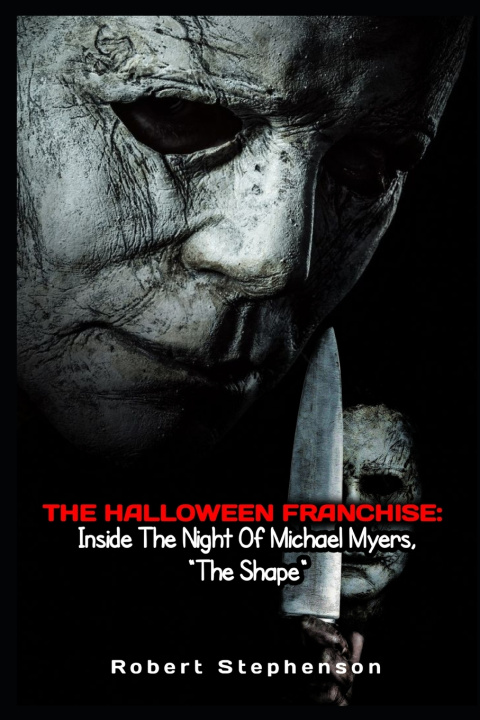
THE OFFICIAL HORROR MOVIE NOVELIZATION TO HALLOWEEN FRANCHISE, written by Robert Stephenson, brings the terrifying sequels to life on the page. Starting from the original film of 1978 down to where the 2018 film left off, it follows Laurie Strode's desperate fight for survival as Michael Myers once again unleashes chaos on Haddonfield; this time facing not just one survivor, but an entire town rising up against him.
This book takes a deep, thoughtful look at John Carpenter's Halloween, and the entire franchise after the first release, uncovering why the film remains one of the most influential and unsettling horror movies ever made.
More than a simple retelling, this guide explores the ideas, techniques, and cultural impact that turned a low-budget independent film into a horror landmark.
Inside this book, you'll explore:
- The historical and cultural context behind Halloween
- John Carpenter's minimalist filmmaking and iconic score
- The meaning of Michael Myers as "pure evil"
- Halloween franchise over the years
- Themes of surveillance, vulnerability, and suburban fear
- How Halloween created the slasher formula used for decades
- Trivia and fun facts viewers always miss
- The film's lasting influence on horror cinema and pop culture
Written for horror fans, film students, and serious movie lovers, this book offers a clear, engaging, and in-depth analysis of a film that continues to terrify new generations.
If you want to understand why Halloween still works-and why it still matters-this book is essential reading.