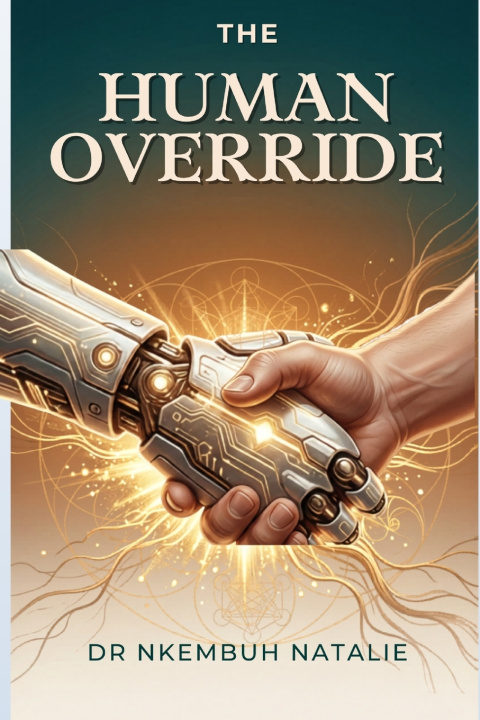
A development program spent more than a billion dollars to fight poverty. Then an algorithm turned away a family who needed it, and no one had the authority to overrule the machine.
This is the failure at the heart of The Human Override. As multilateral development banks and the institutions around them hand more of their decisions to artificial intelligence, ranking who qualifies, scoring who is worthy, deciding who is helped and who is turned away, they are deploying it on the people least able to opt out, appeal, or even see how the decision was made. In these institutions, being wrong is measured in human lives.
Dr Nkembuh Natalie asks the hardest version of a question the world is only beginning to confront: what happens to real people when the algorithm is wrong, in the places where getting it wrong is unforgivable? Her answer is not to reject the technology. It is to insist on the one safeguard these systems keep designing away: a person with the authority to look at a real life, say the data is wrong, and be accountable for what happens next. The human override.
What sets this book apart is where it is written from. The landmark books on algorithmic harm were written from inside the wealthy nations that build these systems. The Human Override turns the lens on the Global South, on development finance, and on the communities these institutions exist to serve. It is rigorous, researched across many countries, and unflinching about algorithmic bias, accountability, and the quiet arrival of digital colonialism in the machinery of aid. Yet it is not a book of despair. It is a clear-eyed and ultimately hopeful case for building systems that serve the vulnerable instead of failing them in their name.
This is a book for anyone who works near a decision that a machine now makes about someone who cannot opt out: in development finance, government, humanitarian work, policy, and any institution that holds power over a life. Read it.
Because the real test of artificial intelligence was never how well it serves those with the most. It is how it treats those with the least.
Dr Nkembuh Natalie is an AI researcher and strategic communications specialist. She holds a PhD in Corporate and Strategic Communication Technology and a DBA in Strategic Management and Artificial Intelligence from the European International University, Paris.