You were named personal representative. Now what?
Nobody prepares for this. One day you're grieving, and the next you're holding a folder of paperwork with deadlines attached to it - and the first attorney you call quotes five figures.
Here's what most people never get told: settling a routine Maryland estate is not really a legal job. It's an administrative one. It's a series of dates, filings, and records. If you know what they are and when they fall, you can do most of it yourself - and bring in an attorney only where one genuinely earns their fee.
Written for Maryland, not "most states"
General estate books can't tell you what a Maryland personal representative actually faces. This one is built entirely around Maryland's process:
- Maryland's two clocks - why some deadlines run from the date of death and the rest from the day you're appointed, and how missing the difference sneaks up on people
- The three tracks - Small Estate, Modified Administration, or standard - and why choosing on day one can save you months of filings and fees you never owed
- The 30-day creditor move most first-timers never learn, which can close a creditor's claim window in about a month instead of six
- Both Maryland death taxes, explained calmly - who actually pays the 10%, why siblings are exempt here even though they aren't next door, and why most Maryland families owe nothing at all
- Selling estate property - the fiduciary disclosure exemption, transfer and recordation taxes, and the nonresident-withholding question to raise with your title company early
- When to stop and call an attorney - a plain red-flag list, so you spend a lawyer's time only where it counts
From someone who actually did it
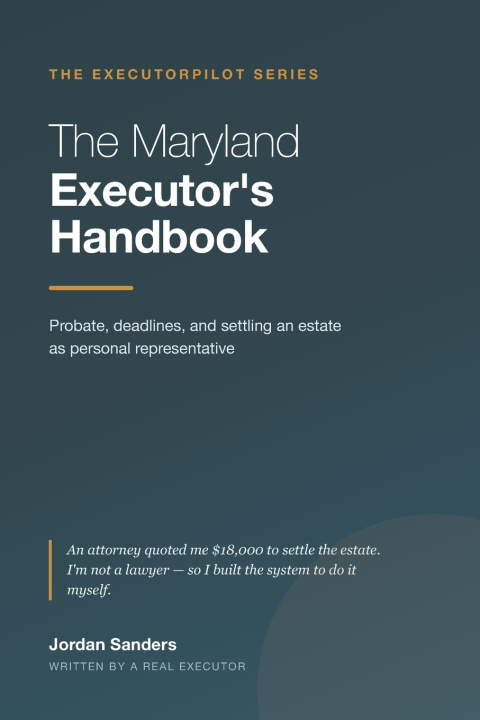
Jordan Sanders was named executor with no legal background. The first attorney he called quoted $18,000 minimum - money that would have come straight out of what he was set to inherit. So he did it himself: met every deadline, sold the house, handled the taxes, and kept a clean record the whole way, from his kitchen table, without taking a day off work.
This is that process, rebuilt around Maryland's rules and organized so you don't have to learn it the hard way.
ExecutorPilot is an educational and organizational resource - not a law firm, not your attorney, and not legal, tax, or financial advice. Maryland rules vary by county and change over time; verify with your county Register of Wills, the Comptroller of Maryland, or a licensed Maryland attorney before acting.