What happens after a machine learning model has been trained? How does an organization move from promising experiments and isolated models to reliable systems that can be maintained, monitored, governed, and improved over time? And what happens when data changes, models drift, pipelines fail, infrastructure scales, or AI systems become more complex?
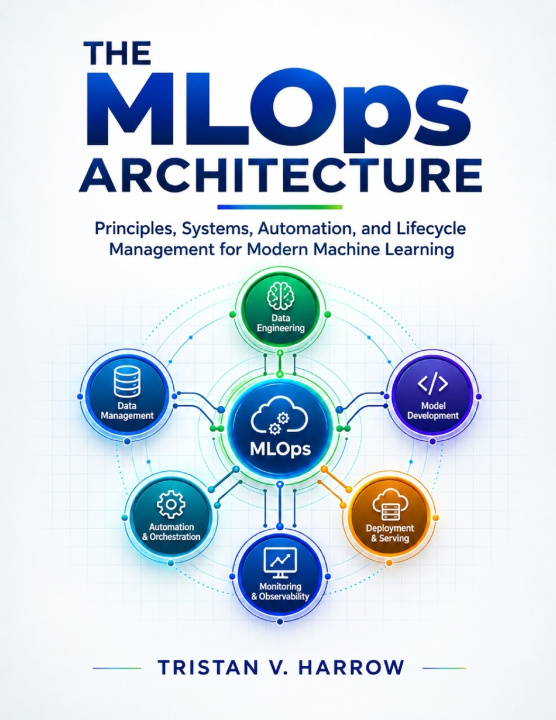
THE MLOps ARCHITECTURE: Principles, Systems, Automation, and Lifecycle Management for Modern Machine Learning by Tristan V. Harrow explores these questions through a conceptual examination of the systems and principles that make modern machine learning operations possible.
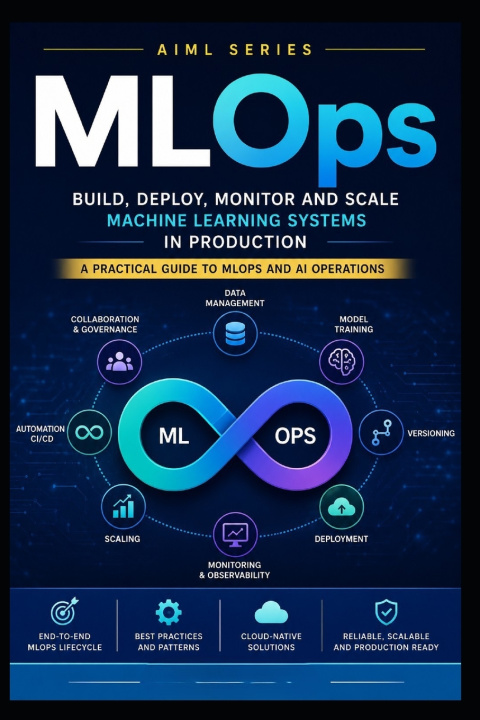
Are you trying to understand what MLOps actually represents beyond a collection of tools? Why do machine learning systems require different operational considerations from conventional software? How do data pipelines, model development, deployment, monitoring, governance, and infrastructure fit together as one lifecycle?
This book examines MLOps as an architectural discipline rather than simply a set of implementation techniques. It explains how the major components of an ML ecosystem connect, why those connections matter, and what principles help organizations build reliable and sustainable machine learning operations.
What role does data engineering play in the machine learning lifecycle? How should experiments, features, models, and artifacts be managed? What is the purpose of model registries and feature stores? How does workflow orchestration transform individual ML tasks into repeatable pipelines? What changes when continuous integration, continuous delivery, and continuous training become part of the lifecycle?
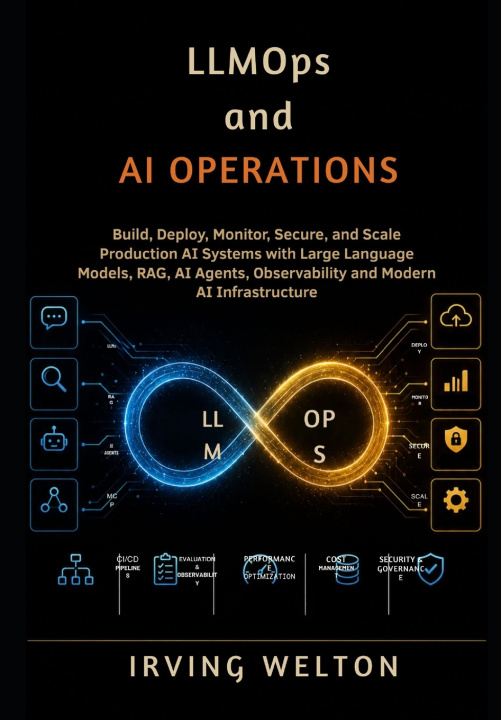
You will explore the concepts behind production machine learning infrastructure, model serving, cloud and Kubernetes environments, scalability, observability, data drift, model performance, security, responsible AI, and governance. The discussion also considers newer operational challenges surrounding foundation models, retrieval-augmented generation, vector stores, LLMOps, AI agents, and automated AI workflows.
Rather than focusing on a step-by-step tool tutorial, THE MLOps ARCHITECTURE develops the conceptual understanding needed to reason about machine learning systems as interconnected operational environments. This makes it useful for readers who want to understand the architecture behind the tools, frameworks, and platforms used across modern ML organizations.
Are you a data scientist who wants to understand what happens to your models after development? Are you an ML engineer exploring the broader lifecycle surrounding training and deployment? Are you studying cloud infrastructure, automation, AI operations, or machine learning architecture? Or are you simply looking for a structured explanation of how modern ML systems move from data to production and continuous operation?
Tristan V. Harrow connects these questions through a coherent examination of MLOps principles, automated pipelines, infrastructure, model lifecycle management, monitoring, governance, optimization, and emerging AI operations.
If you want to understand not only what MLOps does, but why its architecture matters, this book offers a structured foundation for thinking about the modern machine learning lifecycle.
Open THE MLOps ARCHITECTURE and explore the systems, principles, and operational ideas shaping the future of machine learning. Get your copy today and build a stronger conceptual understanding of how modern ML operations are designed, connected, governed, and continuously improved.