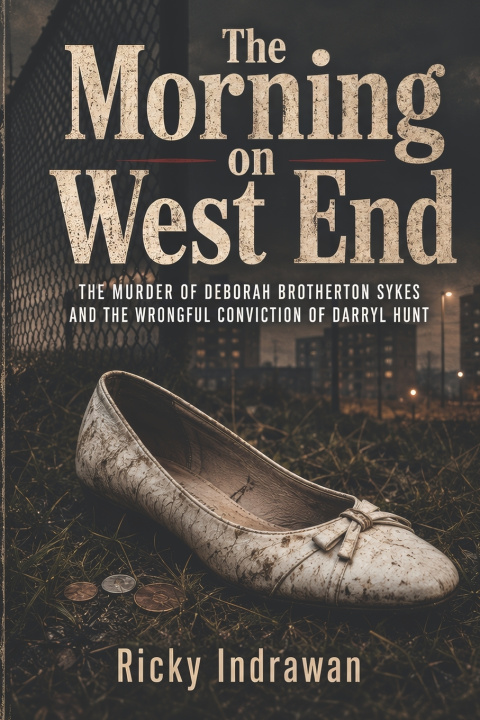
On West End Boulevard, an ordinary commute became a test of what a city was willing to believe.
Deborah Brotherton Sykes left Mooresville before dawn for her job at the Winston-Salem Sentinel. She was expected around 6:30 a.m., parked near Crystal Towers, and had only a short walk left to the newsroom. She did not arrive.
Her car was found on West End Boulevard. Her body was discovered behind Crystal Towers, near the objects that still carried the shape of a working morning: a pocketbook, change, shoes, clothing, and the silence of a routine broken in public space. What happened in those final blocks would become a true crime story about murder, race, memory, and the danger of certainty arriving too soon.
The investigation first moved through unstable human accounts: a 911 call made under another man's name, a witness who identified Terry Thomas before a jail record cleared him, and lineups that began turning uncertainty into recognition. Darryl Hunt, a young Black man from Winston-Salem, entered the file through association, witness pressure, and a story the system was prepared to carry forward.
But the physical record resisted that story. Semen recovered from Deborah Sykes pointed to a type O secretor. Hunt was later reported as a type B secretor. Years later, DNA evidence excluded him, yet freedom did not follow immediately. How does a wrongful conviction survive after the biology begins pulling away?
This book follows the forensic investigation from the body behind the fence to the courtroom story that won, from Crawford-related hearsay to jailhouse informant testimony, from a life sentence that came within one juror of death to the legal theory that kept Hunt imprisoned even after exclusion. The case did not lack warnings. It lacked the institutional will to hear them.
In 2003, the evidence was revisited. The biological trail led to Willard E. Brown. His DNA matched the semen evidence recovered from Deborah Sykes; he later confessed, pleaded guilty, and received life plus ten years. Hunt's conviction was vacated in 2004, and he received a pardon of innocence that same year.
This book contains no images-only cinematic narrative written in the style of a detective-investigator.
The Morning on West End is built for readers who want the human cost kept in view: first Deborah Sykes, whose life must remain larger than the violence that ended it; then Darryl Hunt, whose years were taken by a criminal justice system that would not correct itself soon enough. What does a solved case mean when the first answer was wrong?
Inside, you will uncover how eyewitness testimony can harden into certainty, how a cold case can still hold a living moral charge, and how the same evidence can wait for years before it is allowed to change the official story. The narrative moves with restraint and tension, guiding you through the facts without invented dialogue or unsupported motives.
This Book Is For Readers Who...
• Want victim-centered nonfiction that honors the person before the case file
• Follow DNA-driven investigations and the long fight for innocence
• Are drawn to courtroom stories about conviction, reversal, and proof
• Want a clear timeline through witness claims, appeals, and biological conflict
Perfect For Fans Of...
• Investigative nonfiction with a restrained, cinematic tone
• Courtroom accounts about innocence and state power
• Evidence-based reconstructions centered on DNA and witness reliability
• Southern crime history with social and legal consequence
Deborah Sykes's murder was the first injustice. Hunt's conviction became the second. Together, they ask whether truth can still matter after a system has already chosen its answer.
Read The Morning on West End today and follow the evidence back to the morning that refused to stay buried.