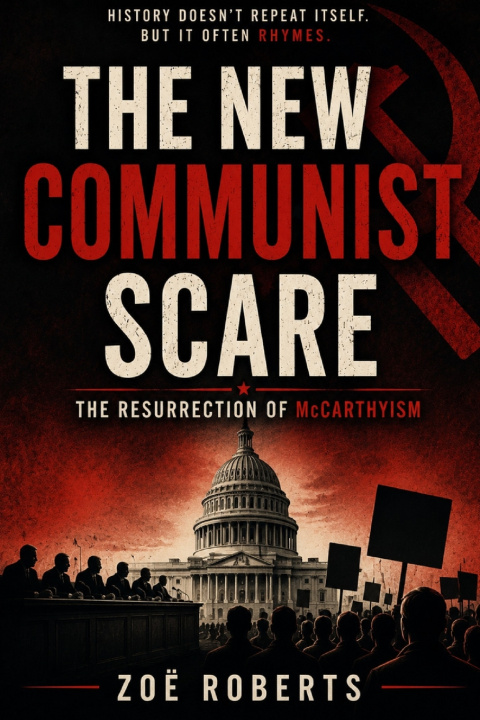
For more than a century, the word communist has carried extraordinary political power in American life. It has shaped elections, justified investigations, destroyed careers, and influenced public debate across generations. Yet how often has the label been used with historical precision rather than political convenience?
The New Communist Scare examines the recurring role of anti-communist rhetoric in American politics, from the First Red Scare and McCarthyism to the Cold War and today's increasingly polarized political landscape. Drawing upon history, political science, constitutional law, psychology, and democratic theory, Zoë Roberts distinguishes legitimate national security concerns from the dangers of guilt by association, ideological labeling, and fear-driven politics.
Rather than defending or condemning any political ideology, this book asks a more fundamental question: How should a constitutional democracy identify genuine threats without allowing political labels to replace evidence?
At a time when accusations often travel faster than facts, The New Communist Scare offers a historically grounded examination of one of America's most enduring political narratives, reminding readers that democratic societies are strongest when they judge ideas and individuals by evidence rather than fear.