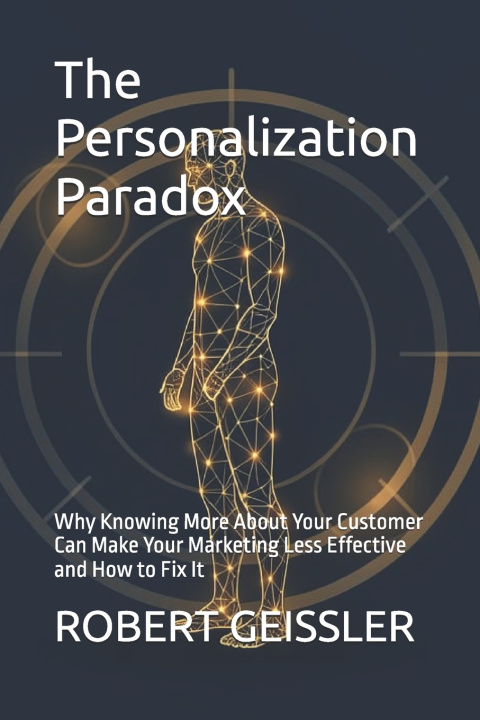
The More Your Brand Knows, the Less Your Customer May Trust It.
Personalization promised to make marketing more relevant. More targeted. More welcome. The data would know what the customer wanted before the customer thought to ask, and the result would be deeper loyalty, higher conversion, and a brand relationship built on the feeling of being genuinely understood.
What actually happened, for a growing share of customers receiving personalized marketing today, is something quite different - a stranger-who-knows-too-much feeling that erodes exactly the trust personalization was supposed to build.
This is the personalization paradox, and it is more consequential than most marketing organizations currently recognize.
Inside, you'll find:
- The Relevance-Intrusion Spectrum - an original framework for placing any personalization decision from this brand gets me to this brand is watching me, and understanding exactly why the threshold between them moves
- Why knowing more about a customer does not automatically mean understanding them better - and the specific mechanisms by which accurate targeting produces the surveillance feeling
- The identity resolution overclaim: why your systems are treating probabilistic inference as verified fact, and what that costs you
- Why click-through rates, favorable A/B tests, and clean consent documentation are false signals of good personalization - and what to measure instead
- The Personalization Audit - a practical four-stage assessment for finding where your current practice sits on the spectrum, honestly
- When to personalize less: the strategic and ethical case for deliberate restraint, and how to communicate it as a brand choice rather than a capability gap
- How to build the organizational accountability structure that makes relationship-quality measurement - not just conversion rate - the actual criterion for program success
- Eight composite case studies on identity resolution overclaims, feedback loops that optimize for the wrong thing, and the specific personalization decisions that cost brands more than they earned
Written for marketing leaders, data strategists, and anyone responsible for how their organization uses what it knows about its customers - this book makes the case that the brands that will hold genuine, durable trust in the years ahead are not the ones that knew the most, but the ones that used what they knew with judgment and restraint.
Knowing more is not the same as understanding better.
Part of the Marketing in the Age of AI Series
Robert F. Geissler ThinkTankMedia.Online
© 2026 Robert F. Geissler. All rights reserved.