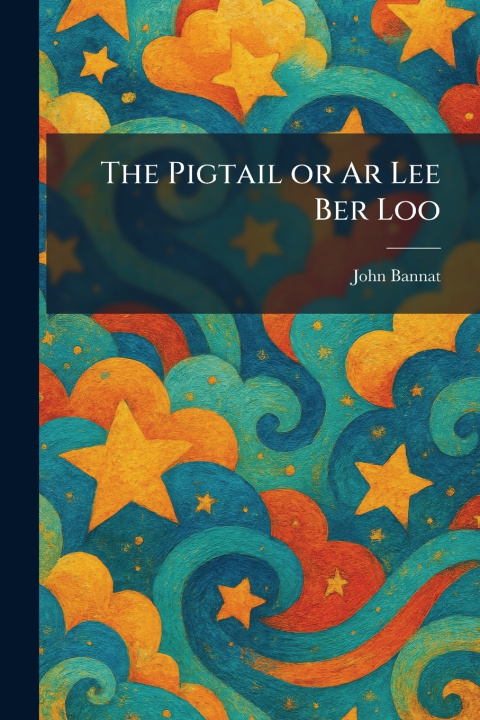
"The Pigtail or Ar Lee Ber Loo" is a charming and whimsical narrative poem designed for young readers. Written by John Bannat, this work stands as a delightful example of early twentieth-century juvenile literature, utilizing rhythmic verse and playful language to tell the story of its titular character. The poem blends humor with a simple, engaging narrative arc that is perfectly suited for reading aloud, capturing the imaginations of children through its unique phonetic style and lighthearted tone.
Focused on the adventures and mishaps of the main character, the book explores themes of curiosity and identity through the lens of a classic fable. The rhythmic structure of the writing emphasizes the linguistic playfulness of the era, making it a valuable piece of literary history for those interested in the evolution of children's storytelling and verse. "The Pigtail or Ar Lee Ber Loo" remains an endearing work that highlights the enduring power of simple, rhythmic fiction to entertain and enchant across generations.
This work has been selected by scholars as being culturally important, and is part of the knowledge base of civilization as we know it. This work was reproduced from the original artifact, and remains as true to the original work as possible. Therefore, you may see the original copyright references, library stamps (as most of these works have been housed in our most important libraries around the world), and other notations in the work.
This work is in the public domain in the United States of America, and possibly other nations. Within the United States, you may freely copy and distribute this work, as no entity (individual or corporate) has a copyright on the body of the work.
As a reproduction of a historical artifact, this work may contain missing or blurred pages, poor pictures, errant marks, etc. Scholars believe, and we concur, that this work is important enough to be preserved, reproduced, and made generally available to the public. We appreciate your support of the preservation process, and thank you for being an important part of keeping this knowledge alive and relevant.