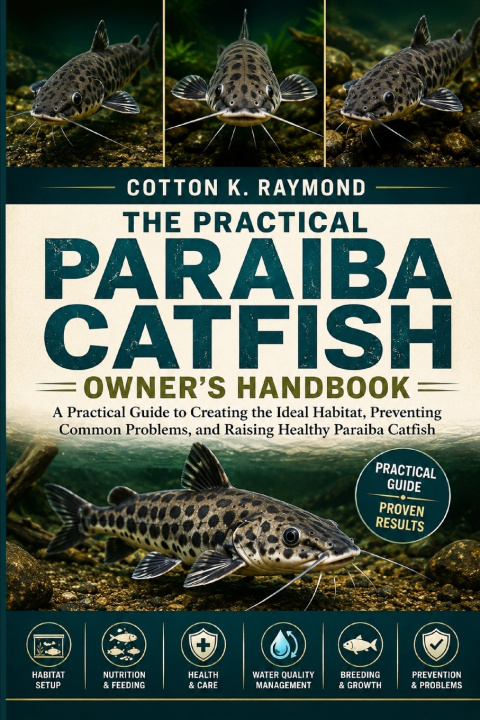
THE PRACTICAL PARAIBA CATFISH OWNER'S HANDBOOK is a comprehensive guide for aquarists fascinated by one of the most impressive giant catfish kept in specialized freshwater systems. Known for their powerful bodies, distinctive whisker-like barbels, active behavior, and potentially enormous adult size, Paraiba catfish require careful planning, excellent water quality, substantial space, and long-term commitment. This handbook provides the practical knowledge needed to understand their needs and manage them responsibly in appropriately sized facilities.
This all-in-one guide covers the major aspects of Paraiba catfish care, from selecting healthy specimens and planning an appropriate habitat to establishing reliable filtration, maintaining stable water conditions, providing suitable nutrition, preventing common problems, and monitoring long-term health. Readers will learn how to create a clean, secure aquatic environment that supports natural swimming, feeding, exploration, and resting behaviors.
Suitable for dedicated aquarists, large-fish enthusiasts, students, educators, and experienced freshwater keepers, this handbook combines practical aquarium-management principles with insights into Paraiba catfish biology, behavior, anatomy, nutrition, growth, and welfare. It also explores aquarium cycling, filtration, water chemistry, substrate selection, feeding practices, quarantine, disease prevention, tank-mate considerations, and responsible long-term management.
More than simply an aquarium care manual, this book encourages realistic expectations about the size and resources required for keeping large catfish. It emphasizes responsible sourcing, appropriate facility planning, excellent husbandry, and respect for the welfare of an animal that can quickly outgrow conventional home aquariums.
What You Will Gain from This Book
A clear understanding of Paraiba catfish biology, behavior, and environmental needs
Practical guidance for planning a suitable habitat around the fish's eventual size
Knowledge about filtration, water quality, nutrition, and routine aquarium maintenance
Strategies for preventing common husbandry problems and reducing stress
Insight into feeding behavior, growth, activity patterns, and social considerations
Greater confidence in managing large, demanding freshwater fish
A realistic understanding of the long-term commitment involved in responsible ownership