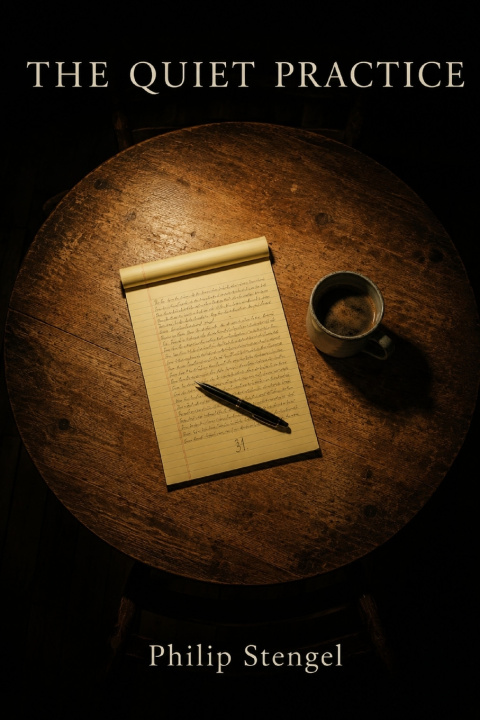
Before you begin, think of a person you cannot stand.
Not a public villain. Not someone the world has already agreed to condemn. Someone smaller. Closer. The person whose name lives in your head like a splinter. The neighbor. The coworker. The relative. The face you avoid in a grocery aisle because even seeing them feels like being pulled back into an old wound.
Hold on to that person.
The man telling this story has held on to thirty-one.
For forty years, he has practiced a private form of correction across the quiet towns, mills, roads, bars, yards, and back rooms of the Pacific Northwest. He calls it the work. He keeps records. He watches carefully. He waits until he is sure enough, though he knows certainty never truly comes. Then someone who made life worse for others simply stops being a problem.
Now he is dying.
Before he goes, he has written this book for whoever comes next.
Part confession, part instruction, part moral trap, The Quiet Practice draws the reader into the mind of a man who believes he stepped into the gap where law, decency, and public courage failed. His stories begin with Roy Halverson, a neighbor who stayed inside every legal line while making a family's life unbearable. They move through decades of targets, methods, doubts, and justifications. But the true subject of the book is not the thirty-one people he removed.
It is the person you named at the beginning.
The Quiet Practice is a dark psychological horror novel about moral infection, private judgment, serial violence, and the terrifying intimacy of a confession that does not ask for sympathy.
It asks whether you understand.