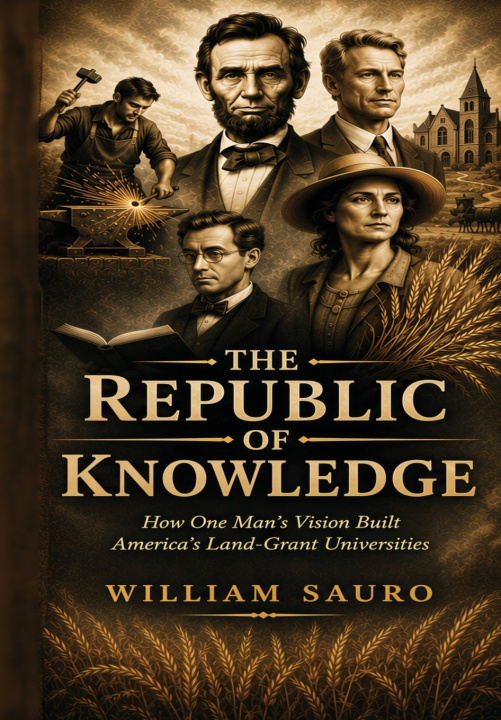
In 1857, a little-known congressman from Vermont named Justin Morrill introduced a radical idea: America should create colleges for ordinary citizens - not just the wealthy, connected, or classically educated elite.
The proposal ignited a political firestorm.
Opponents mocked the concept of educating farmers, mechanics, laborers, and women. Southern politicians feared the rise of free-state influence. Eastern academic institutions dismissed the idea as dangerous populism. Twice vetoed and nearly buried by sectional conflict, the legislation survived only because the nation itself was collapsing into civil war.
But the battle had only begun.
The Republic of Knowledge follows the generations of educators, immigrants, reformers, and students who transformed Morrill's vision into one of the greatest engines of social mobility in modern history. From windswept prairie campuses and struggling agricultural schools to political warfare, scientific breakthroughs, and classrooms filled with first-generation students, the novel traces the unfinished argument over who deserves access to knowledge - and who gets left behind.
Richly researched yet deeply human, William Sauro's sweeping historical novel brings to life the idealists and outsiders who believed education could reshape a democracy. Their struggle helped feed a nation, fuel its industries, and educate millions.