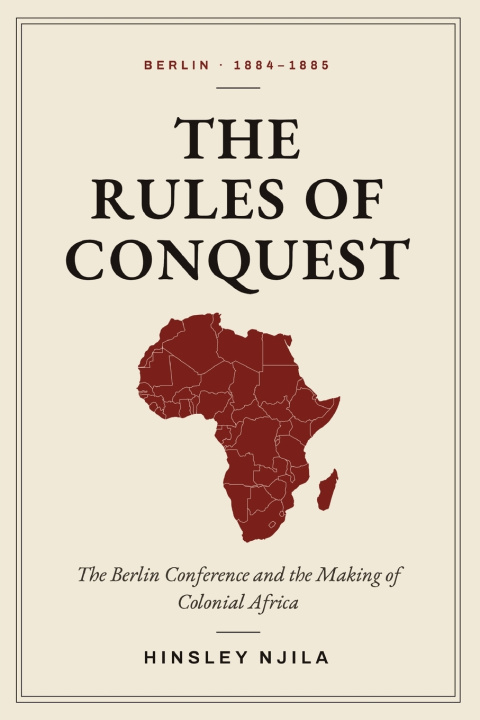
In the winter of 1884, fourteen nations sent delegates to Berlin to settle the future of a continent none of them had been invited to represent. For a hundred and four days, diplomats in the Reich Chancellery argued about rivers, customs duties, and the rules for claiming territory no European government yet controlled. When they finished, they had not drawn a single border in Africa.
That absence is the argument of this book.
The Berlin Conference has become shorthand for the Scramble for Africa - the meeting where the continent was carved up like a cake. It's a vivid image, and it's wrong. The Rules of Conquest argues that Berlin's real achievement was subtler and more dangerous: it built an international system of mutual recognition, a set of rules by which European powers agreed to honor each other's claims, however those claims were actually made. The conquest itself - the treaties extracted at gunpoint, the company charters, the wars of subjugation - came after, on the ground, in twenty different theaters across thirty years. Berlin didn't draw the map. It told the powers how to make one recognized.
Each chapter of this book is a case study in how that system worked in practice, and each one insists on something the standard Scramble narrative leaves out: African rulers, armies, and diplomats were not bystanders to their own conquest. King Leopold II builds a private empire in the Congo out of forged philanthropy and coerced paper treaties - and Congolese leaders resist him at every turn. Samori Touré holds off the French for a decade with a state built to withstand exactly this kind of war. Menelik II and Empress Taytu inflict the only decisive African military defeat of a European power at Adwa, and Ethiopia stays sovereign because of it. The Asantehene's council hides the Golden Stool rather than surrender the one object the British demand as proof of total victory. Lobengula signs the Rudd Concession believing he has sold mining rights; he has signed away a kingdom. In German Southwest Africa, General von Trotha's extermination order against the Herero and Nama shows what "protection" always contained the power to become. None of these men and women are backdrop. They are the reason conquest took thirty years and a hundred separate wars instead of one afternoon in a chancellery.
This is history built for readers who want the real mechanism, not the myth - readers of Adam Hochschild's King Leopold's Ghost and Thomas Pakenham's The Scramble for Africa who are ready for the next layer down. The Rules of Conquest refuses both of the easy stories: that Africa fell because it was divided and unprepared, and that it fell only through European betrayal and treachery. It insists on a harder, truer version - that sovereignty, agency, and catastrophe can occupy the same sentence, chapter after chapter, without either canceling the other out.
The book follows the system Berlin created from the Congo rubber regime through the Mahdist war in Sudan, the Benin Punitive Expedition, the Boer War, the French conquest of Morocco, the First World War's African campaigns, and the postwar partition that followed - arriving, finally, at 1964, when the Organization of African Unity chose to defend the very borders it had never freely drawn, because abandoning them risked something worse. That choice, and the century of conquest behind it, is why Africa's map looks the way it does today.
Rigorously sourced from archival treaties, foreign-office correspondence, and the latest scholarship, and written with the narrative drive of the best popular history, The Rules of Conquest is the book to read to understand not just what happened at Berlin, but what Berlin made possible everywhere else.