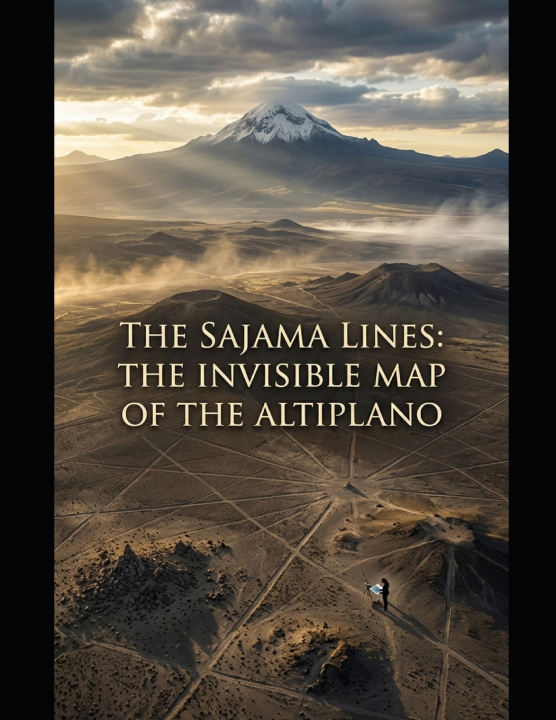
In the Bolivian altiplano, where the wind seems to erase the boundaries between earth and thought, there extends a system of straight traces that challenges the logic of modern maps. These lines, scattered around Nevado Sajama, do not form a visible figure from the ground, but they reveal a hidden structure when the territory is observed as a whole.
A researcher arrives in the area with the intention of documenting ancient ritual paths, but soon discovers that the routes are not merely remnants of the past, but part of a more complex network that connects hills, apachetas, and sacred spaces. Each testimony, each record, and each fragment of cartography opens a new contradiction.
As the investigation progresses, the landscape ceases to be a backdrop and becomes an active system of memory and meaning. Between archaeology, oral tradition, and contemporary interpretation, a central question emerges: whether these lines are paths, symbols, or something we have not yet learned to read.