Under an ordinance of 1927 all the land in the Northern Territories was declared public property. Nobody was moved and no fences went up. A sentence was written, and a farmer could still walk out at dawn and hoe his own field and be, in the eyes of the law, a person occupying the property of the Crown at the Crown's pleasure.
In March of 1955 a bill is laid before the Assembly to give it back, and somebody will need to know who actually holds what. Sayibu Alhassan is twenty seven, a clerk and interpreter, and he is given four months and a bicycle.
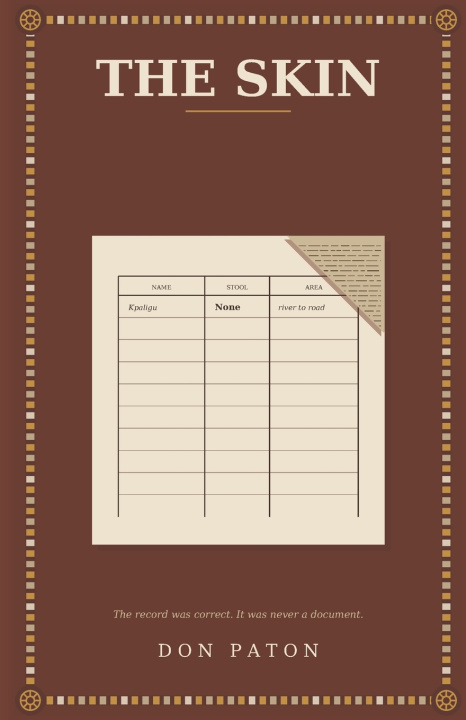
He does the work properly. He sits three days before he opens the book. He asks the same question four different ways until men become irritated with him. Where the printed form will not hold what he is told, he writes the rest on the backs of the pages, in the language it was given to him in, and he writes down nineteen times that he failed to find something out.
In November the bill is withdrawn without a vote. There is no file for a register of holdings and there never has been, and the ledger goes into a cabinet.
In 2026 the land is finally worth something. A rice company has taken twenty five thousand hectares, two chiefs claim the ground on the strength of documents sworn four months apart in 1981 in almost identical words, and Esi Dankwa, a southerner three months into a northern posting, must open an account and write one name on one ruled line before the money can move.
Nobody in this novel lies. The register is accurate on every page and every official who refuses it tells the truth, and the difficulty is not that the document is false but that it is not a document.