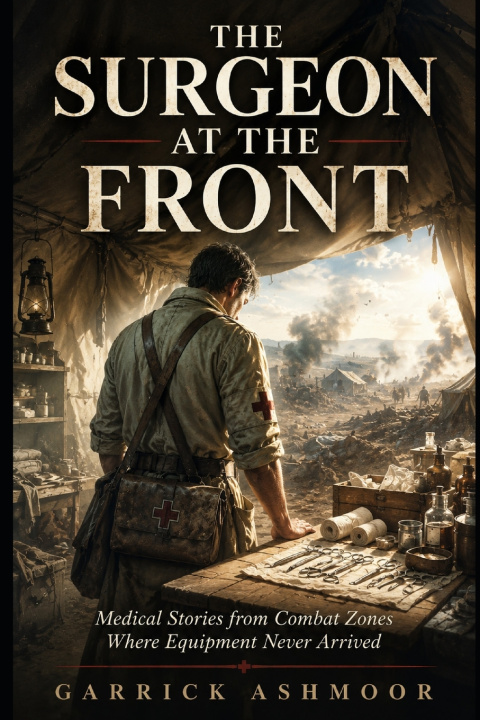
In the winter of 1942, a German surgeon ran out of ether inside a collapsing pocket at Stalingrad, and kept operating anyway. In 1536, a barber surgeon ran out of boiling oil meant to cauterize gunshot wounds, reached for egg yolk and rose oil instead, and accidentally rewrote the rules of battlefield medicine. In 2016, a doctor in a basement beneath Aleppo stitched a wound closed with ordinary sewing thread while a headlamp did the work a hospital light should have done.
This book is built entirely from moments like these. Ten of them, spanning five centuries and four continents, each one a true, documented account of a battlefield medical crisis and the person who refused to let a missing supply chain decide who lived and who did not.
You will meet a Confederate botanist who turned Southern forests into a pharmacy because a naval blockade sealed off every drug from Europe. You will meet a Vietnam helicopter pilot whose last words on the radio, spoken as enemy fire found him, became the unofficial creed of an entire medevac generation. You will meet a Special Forces medic who sewed the modern combat tourniquet on his own sewing machine because the one the Army issued him had not changed since 1945, and it was going to get someone killed.
This is not a textbook. There are no case numbers, no clinical detachment, no chapters that summarize a war in a paragraph and move on. Each chapter is a full, immersive account written the way a great narrative nonfiction story is written, close enough to the ground that you can feel the cold, smell the smoke, and understand exactly what it costs a trained hand to keep working when the tools it was trained to use are simply not there anymore.
Every name in this book is real. Every statistic is sourced. Every quiet act of improvisation, the crow beak clamp forged by a sixteenth century instrument maker, the cotton rags boiled clean in a Confederate field hospital, the frozen morphine thawed in a medic's own mouth at the Chosin Reservoir, actually happened, to a real person, under real fire.
Readers who loved the human urgency of narrative medical history and the battlefield intimacy of frontline memoir will recognize the same instinct here: take a subject that sounds clinical and show you the people inside it, the fear, the improvisation, the small decisions made in seconds that changed the outcome of a life.
You will not read this book the way you read most nonfiction, a chapter before bed, set aside, picked up again next week. You will read it because you need to know what happened next. Because you need to know if the surgeon operating without anesthesia in a Russian winter made it out. Because you need to know what became of the medic who sewed his own tourniquets. Because once you understand what it actually took to keep a wounded person alive when the supply truck never came, you will not be able to put this book down until you have read every page.
This is the history of medicine told from the only place it has ever truly been tested: the moment the equipment runs out.