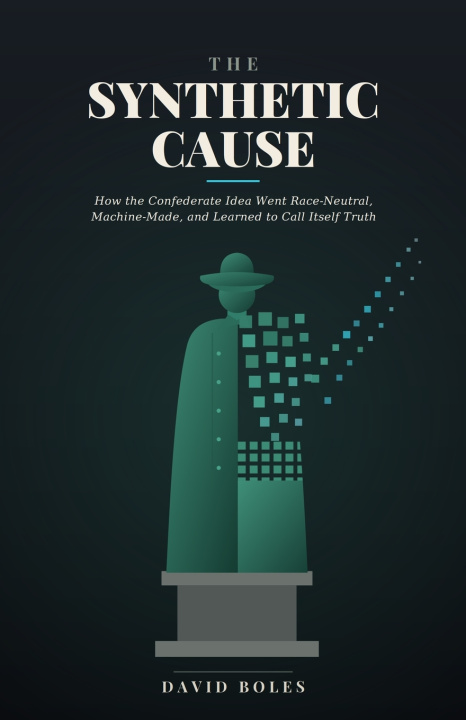
The Confederacy lost the war and won the memory. Its armies were destroyed, its claim to nationhood erased, and the idea those armies carried into the field outlived them all.
In The Synthetic Cause, David Boles traces how a beaten cause captured the story of its own defeat. It wrote the textbooks, raised the monuments, sainted the losers, and walked back into American institutions through the front door. The old machinery worked in bronze and marble and said out loud what it wanted. The machinery running now has learned to hide. It restores Confederate base names through a legal technicality, dilutes the vote under a race-neutral label, sells the battle flag as heritage, and floods the public record with machine-made history no committee of mourners could have produced.
Boles follows the maneuver from the courthouse lawn to the server farm, and on to the ground the fight has finally reached: the capture of the word truth itself, the falsifier wearing the costume of the fact-checker. Timed to the country's two hundred and fiftieth year, the book reads the Lost Cause forward, from the first postwar lie about who freed whom to the generated sources and synthetic feeds now doing the same work at machine speed.
Clear, documented, and unsparing, The Synthetic Cause is a field guide to how a settled question gets pried back open, quietly and lawfully, and to what it costs a country when the record of its own past becomes something anyone can manufacture. For readers of American history, race and politics, and the widening fight over what is real, here is the oldest American argument in its newest and most dangerous form.