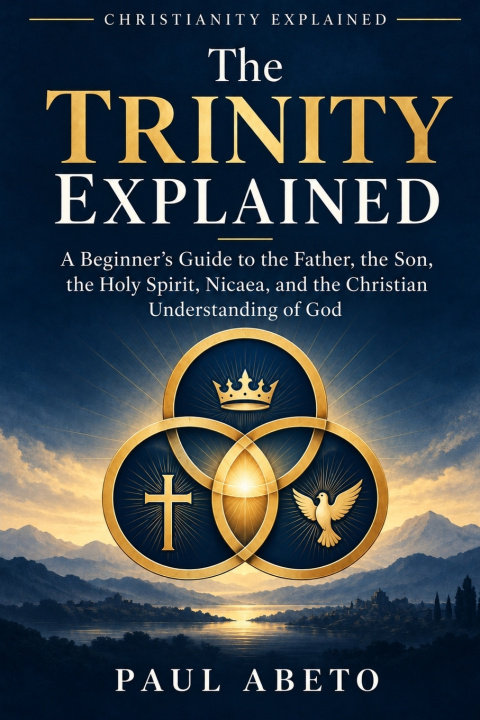
The Trinity Explained is a clear, historically grounded guide to one of Christianity's most difficult and most important doctrines. Many people know the familiar formula "one God in three persons," but far fewer understand where that language came from, why the early Church fought over it, and what Christians actually mean when they speak about the Father, the Son, and the Holy Spirit.
This book leads the reader from the biblical roots of Trinitarian belief through the major theological controversies of the early Church, including Arius, Nicaea, the Cappadocians, Augustine, and the long debates over the Holy Spirit and the Filioque. It also addresses modern objections, common bad analogies, and the practical meaning of the Trinity for Christian worship, prayer, and daily life.
Written for beginners but serious enough for thoughtful readers, The Trinity Explained avoids both academic overload and shallow simplification. It does not assume prior theological training. It explains difficult terms in plain language, respects Catholic, Orthodox, and Protestant traditions, and shows why the doctrine of the Trinity still matters.
Inside, you will find:
- the biblical background of Trinitarian belief
- the historical road from the New Testament to Nicaea and Constantinople
- clear explanations of terms like essence, person, begotten, and procession
- major figures such as Athanasius, the Cappadocians, and Augustine
- the Filioque controversy and East-West differences
- common mistakes and misleading Trinity analogies
- why the Trinity matters for prayer, worship, and Christian life
If you have ever wondered what Christians really mean when they call Jesus God, why the Holy Spirit is not treated as a mere force, or why the doctrine of the Trinity became central to Christian faith, this book will give you a careful and readable answer.