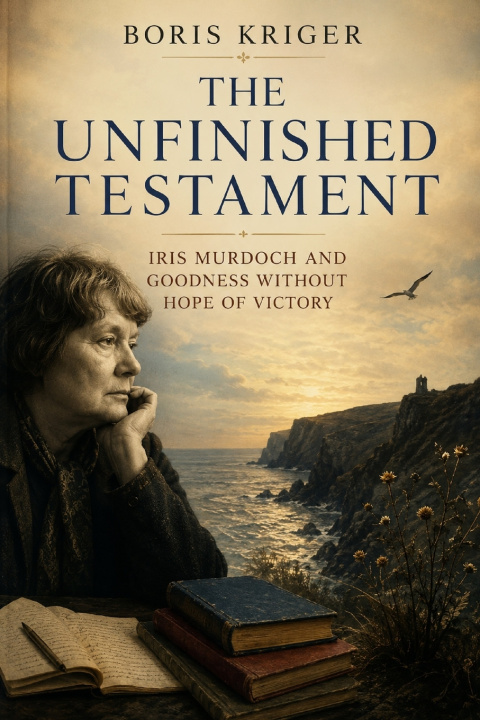
We are told that the moral life is a matter of choices, and that a good person is someone who chooses well. Iris Murdoch spent a lifetime quietly dismantling that comfortable picture. For her, the decisive moral work happens long before any choice arrives, in the invisible labor of how we look at the world. By the time we act, the seeing is already done, and the seeing is nearly everything.
This book takes the luminous, demanding philosophy of one of the twentieth century's most original minds and sets it loose in our own restless age. A novelist and a philosopher who refused to keep the two callings apart, Murdoch believed that goodness is not a reward we earn or a rule we obey, but a light that lets us see other people as real. Against a culture of performance, scoring, and endless self-assertion, she offered something almost scandalous in its modesty: attention as a form of love, humility as a kind of strength, and the courage to keep doing good even when it changes nothing.
Ranging from Plato and the Stoics to the science of perception, from Simone Weil to the economy of the digital feed, this is an invitation to look again at looking itself, and to discover why the greatest human freedom may lie not in getting what we want, but in wanting less loudly. Murdoch left no system and no easy consolation. She left a testament, and it was deliberately unfinished, because the work she described can never be completed, only continued.
Keywords: philosophy, ethics, attention, Iris Murdoch, moral imagination, self-knowledge, goodness