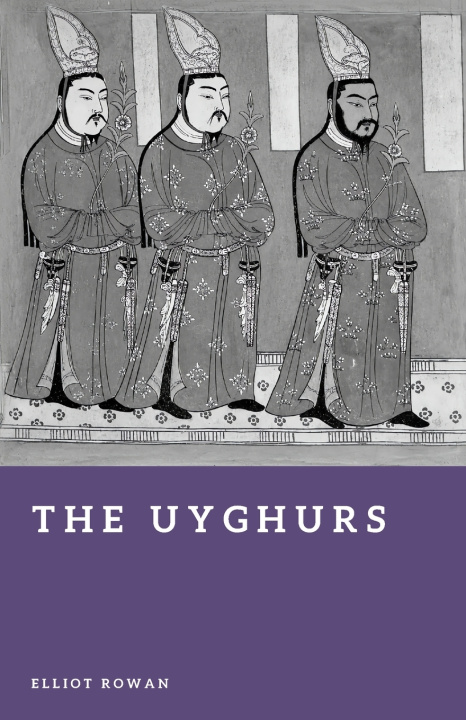
In The Uyghurs: Kings of the Silk Road Oases, Elliot Rowan tells the story of the remarkable civilization that bridged the worlds of East and West for more than a thousand years. From their origins on the Central Asian steppe to the flourishing oasis kingdoms of the Tarim Basin, the Uyghurs transformed some of the harshest landscapes on earth into thriving centers of trade, learning, religion, and culture. Positioned along the Silk Road, they became indispensable intermediaries between China, Persia, India, and the wider Eurasian world, shaping the movement of goods, ideas, and beliefs across continents.
Drawing on archaeological discoveries from Turpan, Gaochang, Jiaohe, Bezeklik, and Dunhuang, along with Chinese dynastic histories, Persian chronicles, and surviving Uyghur manuscripts, Rowan reconstructs a civilization preserved in painted cave temples, ancient cities, administrative records, and forgotten texts buried beneath the desert sands. He explores the rise of the Uyghur Khaganate, the flourishing Kingdom of Qocho, the spread of Buddhism and later Islam, and the enduring influence of Uyghur scribes and administrators within the Mongol Empire.
More than the history of a single people, this book reveals how the Uyghurs helped sustain the Silk Road itself, preserving knowledge, fostering cultural exchange, and connecting civilizations across the breadth of Eurasia. Though their kingdoms ultimately gave way to larger empires, their legacy survived in language, literature, administration, and the enduring memory of the oasis cities that once stood at the crossroads of the ancient world.