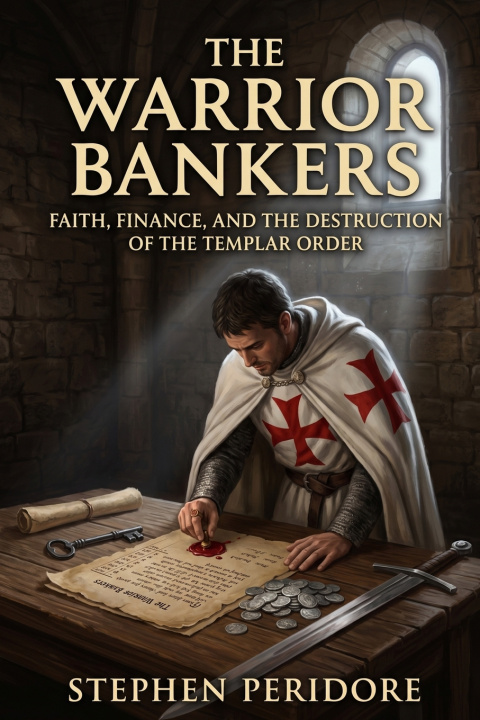
This comprehensive analysis explores the Knights Templar not merely as elite warriors, but as the architects of Europe's first international financial empire. Starting with nine knights on the dangerous roads of Jerusalem, the narrative traces the Order's evolution into a sophisticated multinational organization that managed royal treasuries, pioneered letters of credit, and operated a vast network of commanderies. The book highlights the Templars' 'dual discipline'-the fusion of monastic piety and military precision-which created a trust architecture that made them indispensable to kings and pilgrims alike. However, this very indispensability became their downfall. The book details the calculated destruction of the Order by King Philip IV of France, who used manufactured charges of heresy to cancel his debts. By examining the 'Chinon Parchment' and the physical legacy still visible in the French landscape, the author reveals how the Templars' innovations in banking, logistics, and institutional governance continue to influence the modern world long after the last Grand Master was silenced by fire.