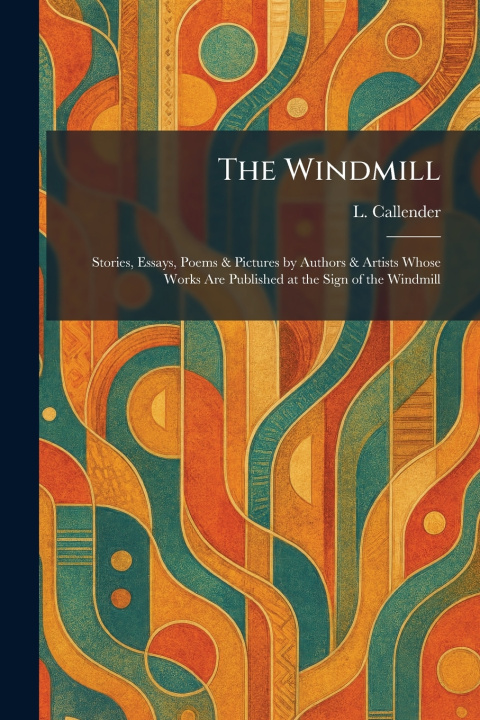
"The Windmill: Stories, Essays, Poems & Pictures by Authors & Artists Whose Works Are Published at the Sign of the Windmill" is a comprehensive and vibrant anthology that captures the diverse creative output of the early twentieth century. Edited by L. Callender, this collection serves as a curated gallery of literary and visual achievement, bringing together an impressive array of short fiction, insightful essays, evocative poetry, and striking illustrations.
The work offers a unique cross-section of the artistic landscape of the 1920s, showcasing the breadth of talent within a specific community of creators. From experimental prose to traditional verse and detailed graphic art, the volume reflects the shifting aesthetic values of the post-war era. Each contribution provides a window into the thematic concerns and stylistic innovations of the period, making it an essential resource for those interested in the evolution of modern English letters and visual culture. By blending multiple disciplines, "The Windmill" stands as a testament to the power of collaborative artistic expression and remains a significant historical record of a pivotal moment in literary history.
This work has been selected by scholars as being culturally important, and is part of the knowledge base of civilization as we know it. This work was reproduced from the original artifact, and remains as true to the original work as possible. Therefore, you may see the original copyright references, library stamps (as most of these works have been housed in our most important libraries around the world), and other notations in the work.
This work is in the public domain in the United States of America, and possibly other nations. Within the United States, you may freely copy and distribute this work, as no entity (individual or corporate) has a copyright on the body of the work.
As a reproduction of a historical artifact, this work may contain missing or blurred pages, poor pictures, errant marks, etc. Scholars believe, and we concur, that this work is important enough to be preserved, reproduced, and made generally available to the public. We appreciate your support of the preservation process, and thank you for being an important part of keeping this knowledge alive and relevant.