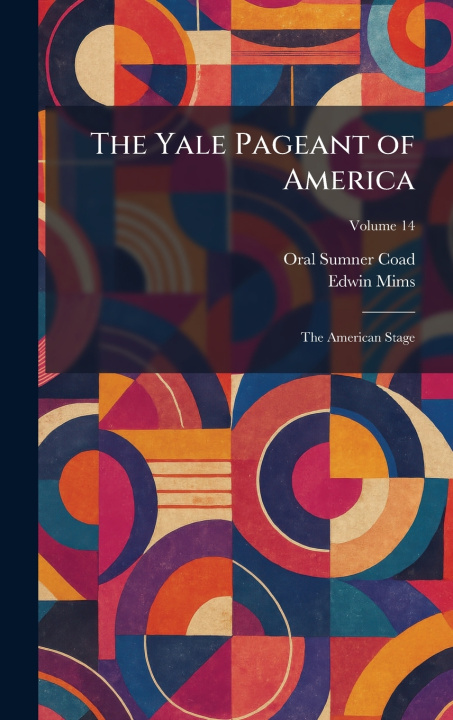
"The Yale Pageant of America: The American Stage" offers a sweeping and detailed exploration of the evolution of theatrical performance in the United States. This work meticulously chronicles the development of American drama from the arrival of itinerant troupes in the colonial era to the sophisticated productions of the early twentieth century.
Authors Oral Sumner Coad and Edwin Mims, Jr. provide a rich narrative that encompasses the rise of professional acting, the establishment of permanent theaters in major cities, and the unique contributions of American playwrights. The text examines the influence of various genres, including melodrama, vaudeville, and the emergence of realism on the stage. Historical figures, influential managers, and the technical advancements in stagecraft are all highlighted to show how the performing arts became a central pillar of American cultural identity.
Focusing on the relationship between the stage and the public, this volume captures the spirit of an era when the theater was a primary source of mass entertainment and a mirror of the nation's social complexities. It remains an essential resource for those interested in the history of drama, performing arts, and American cultural development.
This work has been selected by scholars as being culturally important, and is part of the knowledge base of civilization as we know it. This work was reproduced from the original artifact, and remains as true to the original work as possible. Therefore, you may see the original copyright references, library stamps (as most of these works have been housed in our most important libraries around the world), and other notations in the work.
This work is in the public domain in the United States of America, and possibly other nations. Within the United States, you may freely copy and distribute this work, as no entity (individual or corporate) has a copyright on the body of the work.
As a reproduction of a historical artifact, this work may contain missing or blurred pages, poor pictures, errant marks, etc. Scholars believe, and we concur, that this work is important enough to be preserved, reproduced, and made generally available to the public. We appreciate your support of the preservation process, and thank you for being an important part of keeping this knowledge alive and relevant.