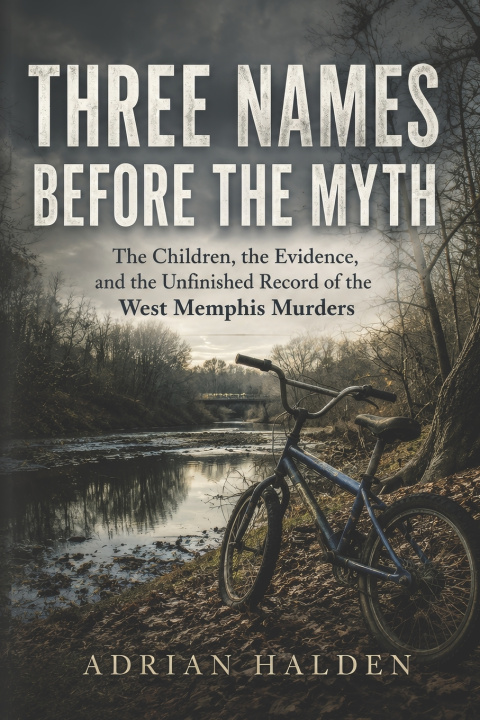
Before the case became a myth, three children were at the center of the record.
Three Names Before the Myth is an evidence-aware true crime investigation of the West Memphis murders: the deaths of Stevie Branch, Christopher Byers, and Michael Moore, the contested convictions of Damien Echols, Jason Baldwin, and Jessie Misskelley, and the unresolved questions left behind by a damaged public record.
The book approaches the case not as advocacy, slogan, or spectacle, but as a disciplined reading of what the record can and cannot bear. Beginning with the boys' lives before Robin Hood Hills became shorthand for violence, it follows the missing-child search, the discovery, the crime scene, the confession evidence, trace evidence, medical interpretation, DNA developments, and the evidentiary disputes that continued long after the 1994 verdicts.
At the center is the tension between legal finality and historical certainty. The convictions gave the case an official answer, but later scrutiny challenged the confession, physical evidence, forensic interpretation, and cultural assumptions that surrounded the investigation. The 2011 Alford pleas opened the prison doors without producing full exoneration in law or a settled account of what happened.
This true crime nonfiction account also examines how media attention changed the case. Documentaries, advocacy campaigns, online forums, and public memory made the phrase West Memphis Three familiar, but fame shifted attention away from the children whose deaths created the case. The book returns the focus to Stevie, Christopher, and Michael while treating the defendants, families, investigators, courts, and evidence with restraint.
Written for readers interested in true crime, wrongful conviction questions, disputed confession evidence, Satanic panic history, forensic uncertainty, and unresolved case records, Three Names Before the Myth does not promise certainty where the record cannot support it. It separates confirmed fact from allegation, court-tested evidence from public belief, and unanswered questions from speculation.
This is a careful, sober reading of a case that still resists easy conclusion-an invitation to look beyond myth and return to the children, the evidence, and the unfinished record.