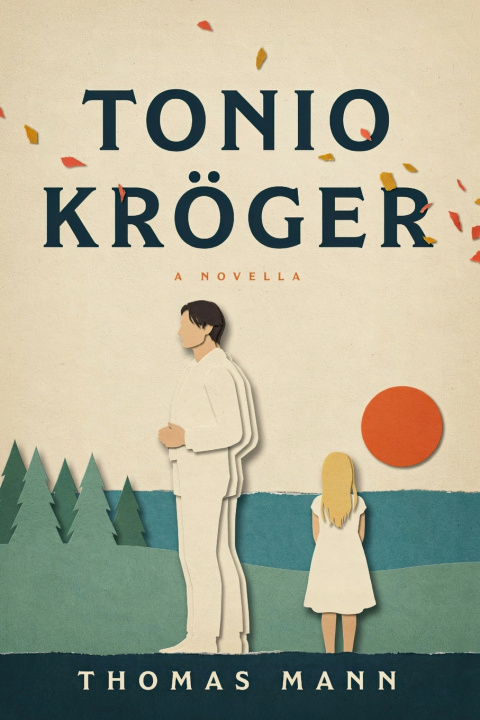
Tonio Kröger is fourteen years old, the son of a proper north German consul and a beautiful, unconventional mother from the south, when he first understands that he is different from everyone around him. He writes poetry his teachers mock. He loves, from a hopeless distance, a blond and blue-eyed classmate who will never understand him. He watches the easy, unreflective happiness of ordinary people the way a starving man might watch a feast through glass.
Years later, having become the writer he was always going to become, Tonio explains himself to a friend in Munich: the artist, he insists, must die to ordinary life in order to render it. Feeling must become material. Love must become observation. It is a cold philosophy, eloquently defended, and it is not quite true.
When Tonio travels north again - a stranger now in the town of his childhood, mistaken at one point for a criminal simply for looking foreign in the place he was born - he encounters, by chance, the golden, ordinary people he once loved and envied in equal measure. And he discovers that what he wants, after everything, is not distance but belonging: not the icy purity of art alone, but a way back to the warmth he never stopped watching.
First published in 1903, when Mann was twenty-eight, Tonio Kröger is one of the most personal and most beloved works he ever wrote - a young writer's tender, unsparing portrait of what it costs to become an artist, and what, in the end, an artist most wants to keep.
By Thomas Mann. Nobel Prize in Literature, 1929.