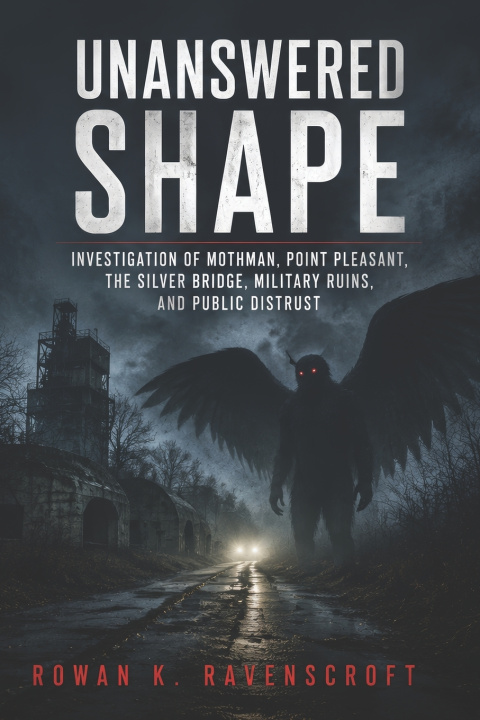
A strange report. A documented disaster. A legend built in the space between them.
In 1966, reports of a large winged figure near Point Pleasant, West Virginia, entered the public record. A year later, the Silver Bridge collapsed across the Ohio River. Unanswered Shape examines how those events became joined to abandoned military infrastructure, environmental concern, media ambiguity, folklore, and a lasting distrust of official explanations.
This is not a book that asks readers to accept Mothman as a proven creature, omen, experiment, or government secret. It follows a claim-versus-document method: witness testimony is treated as testimony, official records are weighed for what they establish and what they leave unresolved, and later theories are kept separate from verified history. The central question is not simply "What was seen?" but how one frightening report became powerful enough to reshape a town's public memory.
The investigation returns to the first accounts near the former wartime explosives site north of Point Pleasant, examining the language of "bird, creature, something," the limits of perception under fear and darkness, and the role of the landscape itself. The military-industrial history of the area, its conversion to wildlife land, and its contamination record are documented without turning environmental fact into proof of mutation or secret biological work.
The book then restores the Silver Bridge collapse to its proper place as a real human and engineering disaster. It separates the documented failure and policy aftermath from the later omen narrative, asking why technical explanation can identify how a catastrophe happened while still failing to satisfy the emotional need for meaning that follows public loss.
From local newspaper framing and archive keeping to paranormal interpretation, dark-suited visitor stories, bird and owl explanations, film, tourism, museum culture, and later sightings elsewhere, the investigation traces the machinery that transformed uncertainty into an American legend. It also confronts the ethical question of what happens when folklore begins to take possession of a tragedy.
Two chronology dockets distinguish the verified baseline from the later spread and mutation of the narrative. An evidence docket grades major subjects by source strength, showing where official records, credible reporting, reasonable inference, disputed claims, and unsupported speculation belong in relation to one another.
Written in a restrained, atmospheric, evidence-aware style, Unanswered Shape is for readers drawn to Mothman history, Appalachian folklore, cryptid nonfiction, unexplained phenomena, infrastructure disasters, media mythmaking, and the cultural psychology of belief. It offers neither blind belief nor easy dismissal-only a careful look at what is known, what is alleged, what is plausible, and what remains unfinished.
Enter the record where the legend began, and follow the unanswered shape that remained after the documents had spoken.