- Can we be certain that God, the soul, or the self truly exist?
- Is it possible to know anything beyond sensory experience?
- Can one event genuinely cause another-or do we simply assume causation out of habit?
- Is reason really nothing more than the servant of the passions?
These questions lie at the heart of David Hume's philosophy and continue to shape modern debates about knowledge, science, morality, and human nature. As the leading figure of British empiricism and the Scottish Enlightenment, Hume profoundly influenced Immanuel Kant and transformed the course of modern philosophy.
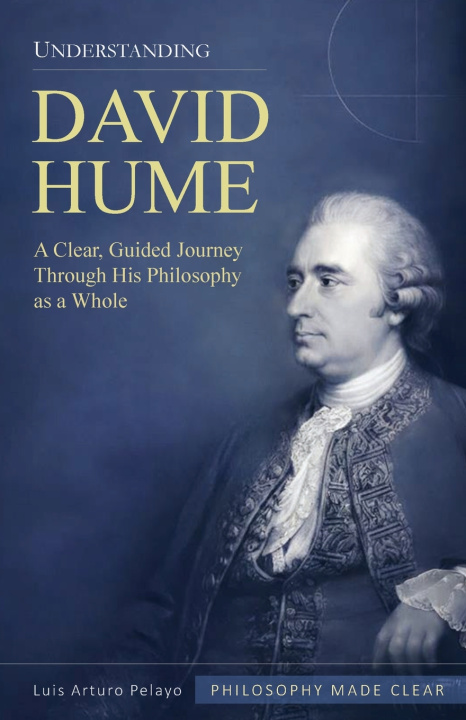
Understanding David Hume offers a clear, guided, and accessible introduction to Hume's philosophy as a coherent whole. Rather than presenting isolated doctrines or technical disputes, this book leads readers step by step through his central ideas: epistemology and skepticism, causation and the problem of induction, the critique of metaphysics, moral sentiment and utility, religion and superstition, social life, and the nature of the human being.
Written in a reader-friendly style and designed for modern readers, the book explains complex concepts with clarity, avoids unnecessary jargon, and builds each chapter upon the previous one. No prior training in philosophy is required. Instead, the reader is guided through the internal logic of Hume's thought in a way that is both rigorous and approachable.
Ideal for students, autodidacts, and general readers seeking a reliable introduction to David Hume's philosophy, Understanding David Hume shows why his ideas remain deeply relevant today-and why his questions continue to matter in a world shaped by science, uncertainty, and human experience.