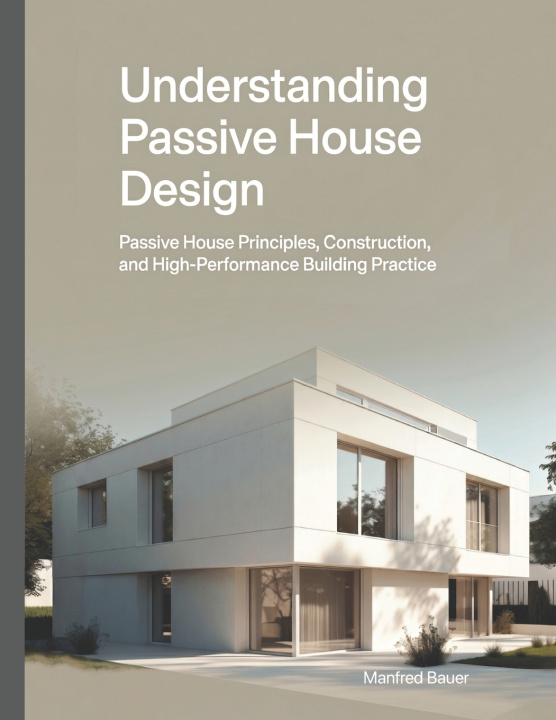
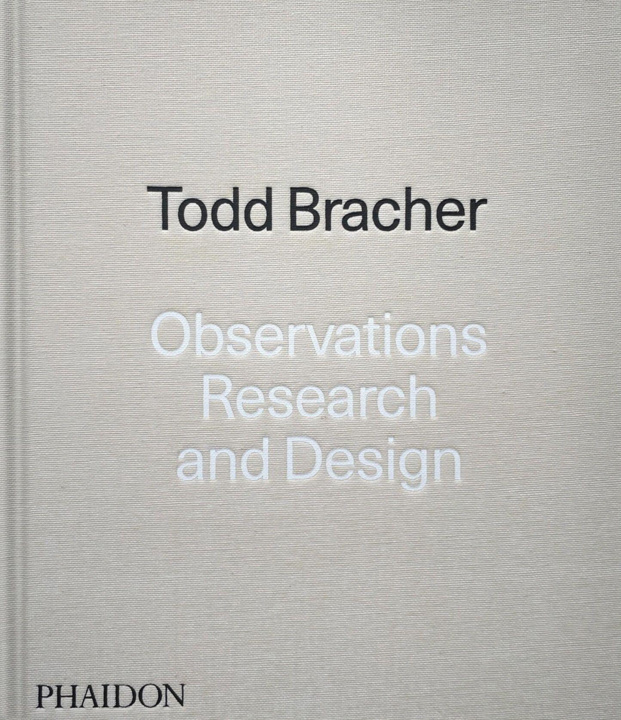
Passive House is often presented as a standard defined by targets, calculations, and certification criteria. In practice, it is something far more demanding and far more valuable: a way of thinking about buildings as coherent systems of form, fabric, and performance.
This book approaches Passive House not as a checklist, but as a discipline. It explains how energy, air, heat, and moisture move through buildings, and how these physical realities must be understood and shaped through design decisions from the earliest stages of a project. Form, orientation, envelope strategy, and construction detailing are treated not as separate concerns, but as interdependent parts of a single energy and comfort balance.
Drawing on building physics and construction practice, the book connects abstract principles to real assemblies and site conditions. It shows how continuity of insulation, airtightness, and thermal control are achieved or lost at junctions, in sequencing, and through everyday decisions on site. Particular attention is given to the gap between design intent and built reality, where many high-performance ambitions succeed or fail.
Comfort is treated as the true measure of performance. Beyond air temperature, the book explores radiant conditions, surface temperatures, air movement, and indoor environmental quality as lived experience. In this context, Passive House becomes less a technical standard and more a method for creating stable, durable, and quietly supportive environments.
This is not a simplified guide or a certification manual. It is a technical and architectural exploration for those who want to understand how Passive House works in practice and how to design and build with clarity, precision, and coherence.
Key Topics Covered
• The principles of Passive House design and energy balance
• Building form, climate, and demand reduction
• Insulation, airtightness, and thermal bridge control
• Windows, solar gain, and overheating risk
• Ventilation, air quality, and moisture behaviour
• Construction systems and junction detailing
• Sequencing, workmanship, and performance on site
Who This Book Is For
• Architects seeking to integrate design and building physics
• Builders and contractors working on high-performance projects
• Engineers and consultants involved in envelope and systems design
• Advanced students developing a systemic understanding of buildings
What This Book Offers
• A clear framework for understanding Passive House beyond certification
• A connection between design decisions and physical performance
• Insight into construction realities, risks, and failure points
• A coherent approach to comfort, durability, and energy demand
• A professional perspective grounded in both theory and practice