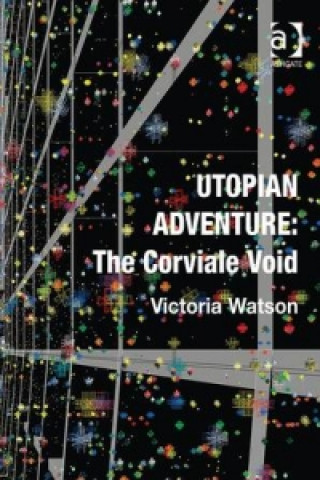
Könyv Utopian Adventure: The Corviale Void Victoria Watson

Utopian Adventure: The Corviale Void

Szerző: Victoria Watson
Nyelv: Angol
Kötés: Kemény kötésű
Elérhetőség: 50 % esély
Keressük az egész világon
80 568 Ft
This book is about contemporary issues in architecture and urbanism, taking the form of a project fo...

Információk a könyvről

Szerző
Nyelv
Angol
Kötés
Könyv - Kemény kötésű
Kiadva
2011
oldal
136
EAN
9781409409915
ISBN
1409409910
Enbook ID
04782325
Súly
372
Méretek
174 x 221 x 14

Teljes leírás

This book is about contemporary issues in architecture and urbanism, taking the form of a project for The Corviale Void, a one kilometre long strip of urban space, immured in the notorious Corviale housing development in the Southwestern sector of Rome. Corviale is a bizarre object, single-minded in its idea, the history of Corviale can be traced to debates in Italian architecture culture of the 1960's, including Aldo Rossi's objection to urbanisation, as articulated in his books and projects. On the one hand the project for the Corviale Void begins with one of the original theorists of modern urbanisation and architecture, Giovanni Battista Piranesi, looking into his fascination with the insides of walls. On the other hand the project begins with a new material form, The Air Grid. Like the forms appearing in Piranesi's etchings, Air Grid is made from a kind of hatching, but Air Grid is hatched out of colour vectors, literally drawn into the air. The human eye is easily mesmerised by the Air Grid, scanning back and forth it reads the colour form as animated, in some sense alive. At the same time as the Italian architects were engaged in those activities that would eventually give birth to the Corviale Void, the painter Yves Klein, was creating The Architecture of the Air. Klein's work is of special interest to the project of the Corviale Void because of the important role of colour in the development of his thinking about architecture. By attending to Klein's parallel inquiry Air Grid is brought into dialogue with the philosophy of Arthur Schopenhauer, who was one of the first thinkers to develop a physiological theory of colour. The important thing about Schopenhauer's thinking is the careful way he looked at physiological phenomena, regarding them as directly informed by metaphysical powers; for Schopenhauer Architecture too is a physiological matter and hence metaphysical. The concluding proposal for the Corviale Void presents a metaphysical architecture of colour: the colour that was originally immured in the Air Grid lattice is finally set free, its release has interesting implications for the debates about architecture and urbanism today.

Érdekelheti

Post-Utopian Spaces

Valentin Mihaylov
77 013 Ft

Tristes Tropiques

Claude Lévi-Strauss
5 886 Ft

Modern Utopia

H G Wells
4 349 Ft
7 792 Ft

Fun and Fantasy

Jeanne Ed Hale
12 782 Ft
8 689 Ft
6 528 Ft
71 696 Ft

Estimation

Penny Dowdy
9 442 Ft

Dream Cities

Wade Graham
7 792 Ft

Modern Utopia

Herbert George Wells
4 550 Ft
5 017 Ft
61 160 Ft

Workings of the Spirit

Houston A. Baker
39 380 Ft

Touch of Minx

Suzanne Enoch
2 430 Ft
40 546 Ft

Azok a vásárlók, akik ezt a könyvet megvásárolták, a következőket is megvásárolták