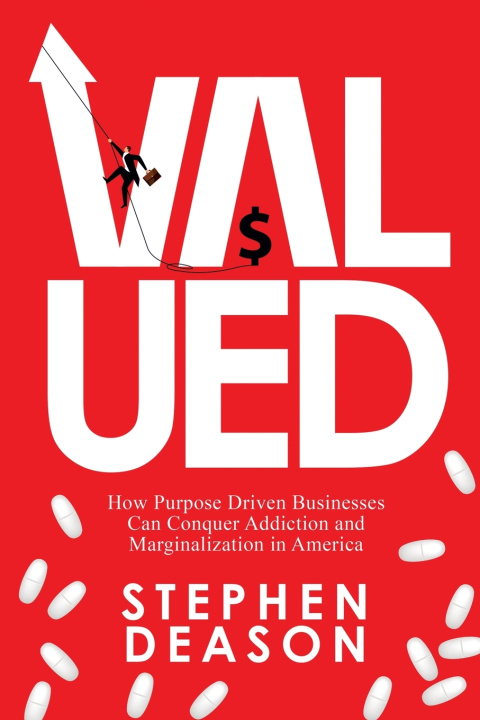
Somebody is already paying for the people this economy will not hire.
The bill goes to their families, to shelters, to emergency rooms, and to jails. None of those payers agreed to it, and most of them cannot refuse it.
Valued is written first for the owner or manager deciding whether to hire someone with a criminal record or a history of addiction. Stephen Deason's case is that the employers who turn these applicants away usually never weigh what the applicants can do. Those employers stop at the record. The owner who reads past it and pays at least the going rate is hiring someone to whom the job is worth more than it is to a candidate with five offers.
Most people coming home from prison served a sentence for something they did. Nobody sentenced them to what starts the day they walk out, and for many of them it never ends.
The first thing the book asks of an owner is to price a hiring rule before keeping it. In Chapter 5 the rule screens out any felony conviction inside seven years. Judy prices it for her vice president: eleven weeks of vacancy, forty-one hundred dollars of overtime, two people who will not take the Saturday, a chiller running on a reset, and the production the plant never ran, which shows up on nobody's line. Any owner can run the same arithmetic on a rule in their own company.
Deason built the case between 2016 and 2021 around real companies and left it largely as he wrote it. Every chapter ends by saying where that evidence went stale.
Deason has worked to place hundreds of people from disadvantaged backgrounds into a variety of careers. The main text ends with an essay called What It Cost, and Why I Stopped, on what the eighty-hour weeks cost and who paid for them.