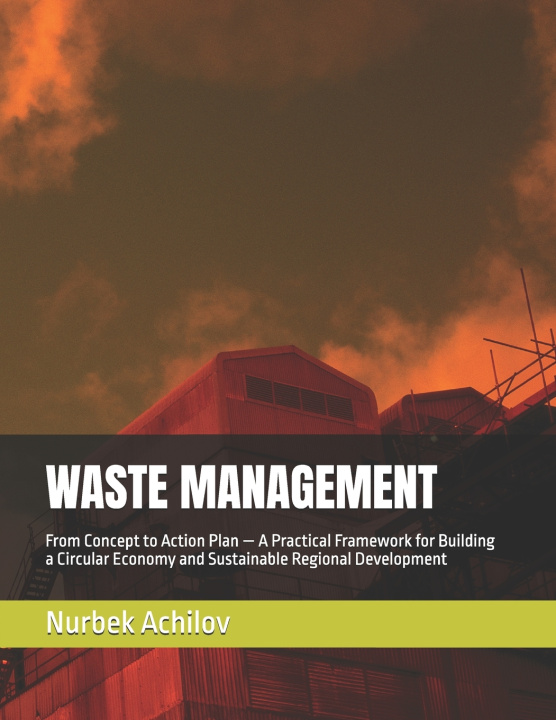
WASTE MANAGEMENT: From Concept to Action Plan: A Practical Framework for Building Smart Waste Systems, a Circular Economy, and Sustainable Regional Development
What if waste was no longer considered a problem-but one of the world's greatest economic opportunities?
Waste Management presents a new vision for the future of waste management by demonstrating how household and industrial waste can become a strategic resource for economic development, technological innovation, environmental sustainability, and regional competitiveness.
Unlike traditional books that focus primarily on waste collection and disposal, this book introduces a comprehensive framework that integrates the Circular Economy, Artificial Intelligence, smart logistics, digital transformation, industrial policy, regional development, finance, governance, and sustainable business models into a single, practical system.
Drawing on international best practices from Germany, Japan, the Netherlands, Finland, South Korea, Singapore, Sweden, and many other countries, the author explains how governments, businesses, researchers, and communities can work together to create modern waste management systems that generate long-term economic, environmental, and social value.
Inside this book, you will discover:
- Innovative business models for household and industrial waste management.
- Circular economy strategies and the 10R framework for sustainable resource management.
- Artificial Intelligence, IoT, GIS, Digital Twins, and smart technologies transforming waste systems.
- Modern logistics, transportation, and regional waste management planning.
- Financial, production, and operational models for integrated waste management.
- Performance indicators (KPIs), monitoring systems, and implementation roadmaps.
- International case studies and best practices from leading countries.
- Practical policy recommendations for governments, municipalities, businesses, and investors.
- Future trends shaping waste management toward 2050, including autonomous systems, green finance, carbon neutrality, and circular industrial ecosystems.
The book argues that effective waste management is no longer simply an environmental service. It has become a strategic driver of industrial competitiveness, investment, innovation, climate action, employment creation, and sustainable economic growth.
Whether you are a policymaker, researcher, university student, engineer, entrepreneur, investor, municipal manager, environmental professional, or business leader, this book offers both a strategic vision and practical tools for designing the next generation of sustainable waste management systems.
As countries around the world accelerate their transition toward low-carbon and circular economies, the ability to transform waste into valuable resources will become one of the defining competitive advantages of the twenty-first century.
This book provides the roadmap for that transformation.