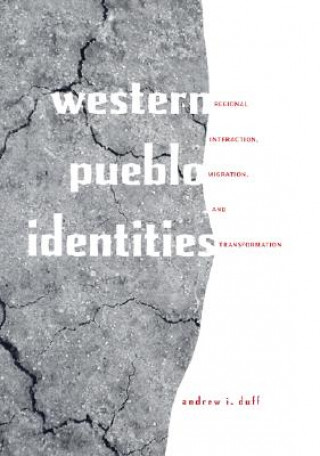
Könyv Western Pueblo Identities Andrew I. Duff

Western Pueblo Identities

Regional Interaction, Migration, and Transformation

Szerző: Andrew I. Duff
Nyelv: Angol
Kötés: Kemény kötésű
Elérhetőség: Beszállítói készleten alacsony példányszámban
Küldés 13-18 napon belül
20 736 Ft
Identifying distinct social groups of the past has a always challenged archaeologists because unders...


Információk a könyvről

Szerző
Nyelv
Angol
Kötés
Könyv - Kemény kötésű
Kiadva
2002
oldal
233
EAN
9780816522187
ISBN
9780816522187
Enbook ID
06399596
Súly
531
Méretek
161 x 235 x 21

Teljes leírás

Identifying distinct social groups of the past has a always challenged archaeologists because understanding how people perceived their identity is critical to the reconstruction of social organization. Material culture has been the standard measure of distinction between groups, and the distribution of ceramics and other artifacts has often been used to define group boundaries.Western Pueblo Identities argues that such an approach is not always appropriate: demographic and historical factors may affect the extent to which material evidence can define such boundaries. Andrew Duff now examines a number of other factors -- relationships among settlement size, regional population densities, the homogeneity of material culture, and local and long-distance exchange -- in order to trace the history of interaction and the formation of group identity in east-central Arizona and west-central New Mexico from A.D. 1275 to 1400.Using comparative data from the Upper Little Colorado and Zuni regions, Duff demonstrates differences in patterns of interaction within and between regions with different population densities. He then links these differences to such factors as occupational history, immigrant populations, the negotiation of social identities, and the emergence of new ritual systems.Following abandonments in the Four Corners area in the late 1200s, immigrants with different historical backgrounds occupied many Western Pueblo regions -- in contrast to the Hopi and Zuni regions, which had more stable populations and deeper historical roots. Duff uses chemical analyses of ceramics to document exchange among several communities within these regions, showing that people in less denselysettled regions were actively recruited by residents of the Hopi and Zuni regions to join their settlements. By the time of the arrival of the Spaniards, two distinct social and territorial groups -- the Hopi and Zuni peoples -- had emerged from this scattering of communities.

Érdekelheti

Girls in the Water

Victoria Jenkins
4 293 Ft
6 405 Ft

Sexuality

Chess Denman
22 017 Ft

Duty Free Shop

Francisco Paco Mieres
5 795 Ft
3 715 Ft
5 983 Ft

Rock-Elephant

Sam Venable
6 116 Ft

Race and the Jury

Hiroshi Fukurai
39 428 Ft

Azok a vásárlók, akik ezt a könyvet megvásárolták, a következőket is megvásárolták

11 066 Ft

Zeit / Single

Rammstein
3 783 Ft
6 929 Ft