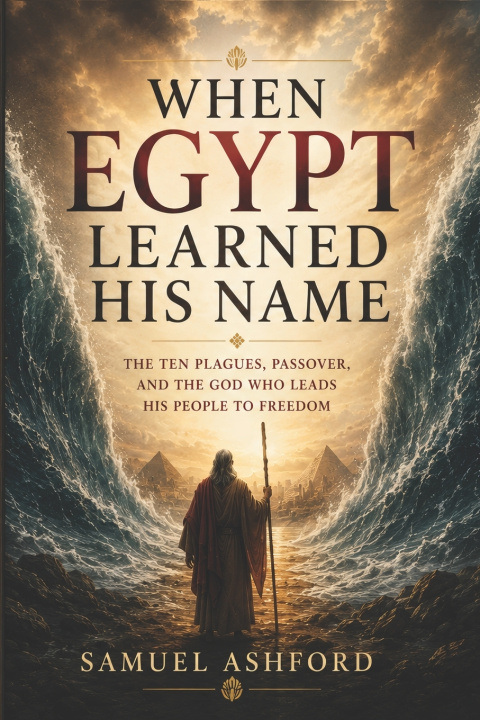
Pharaoh asked, "Who is Yahweh?" The answer came through warning, judgment, Passover, and deliverance.
For readers seeking an accessible Exodus Bible study, When Egypt Learned His Name explores the ten plagues of Egypt within the larger biblical story of slavery, covenant faithfulness, hardened resistance, worship, and freedom. Rather than treating the plagues as ten isolated disasters, the book begins with Israel's forced labor, threatened families, and cries rising from generations of suffering-and with the God who hears, remembers, sees, and knows.
The confrontation between Moses and Pharaoh is more than a contest of power. Pharaoh refuses the command to release Israel so that the people may worship, while the Lord exposes the limits of political authority, economic security, religious systems, and every power that claims ownership over human lives. From the Nile turned to blood through darkness and the final night of the firstborn, each chapter follows how judgment reveals God's authority and moves the story toward Passover and departure.
The book approaches difficult questions with care. It considers the hardening of Pharaoh's heart without erasing either human responsibility or divine sovereignty. It distinguishes direct biblical claims from disputed theories about Egyptian deities and possible natural explanations. It also treats the grief of the tenth plague seriously, placing it within the history of oppression, murdered Hebrew sons, repeated warnings, and Pharaoh's persistent refusal-without turning human suffering into spectacle.
Passover stands at the center of the journey. The marked doorways, the meal eaten in readiness, and Israel's departure show that deliverance is received through trusting God's provision. For Christian readers, the study follows the biblical movement from Passover to Jesus Christ, the Lamb of God, while avoiding careless allegory. Redemption leads not to spiritual pride, but to worship, obedience, gratitude, and a life shaped by grace.
The final chapters bring Exodus into Christian discipleship. They examine the difference between regret and repentance, the danger of protecting control at another person's expense, the "Pharaoh" patterns that can appear in leadership and relationships, and the truth that freedom is more than leaving a place of bondage. Deliverance begins a journey of renewed trust, truthful memory, healthy boundaries, accountable community, and faithful obedience. The book also makes room for pastoral, medical, psychological, and legal support where trauma, addiction, abuse, or unsafe circumstances require responsible care.
Written for ordinary Christian readers rather than specialists, this practical and Scripture-centered study invites readers to explore Exodus 1-15 with humility. It offers historical and cultural background where helpful, reflective application without forced modern parallels, and a steady focus on the God who calls his people out of bondage and into faithful freedom.
Read alongside Exodus and consider what the story reveals about false power, delayed repentance, God's provision, and the freedom that learns to worship.