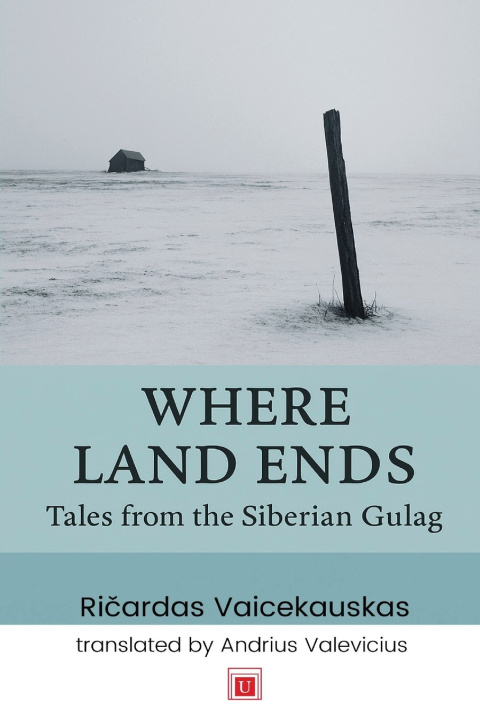
RiČardas Vaicekauskas (1926-2011) had to wait half a century, until the fall of the Soviet Union, to tell the story of his teens and young adult years. Like tens of thousands of other Lithuanians, Vaicekauskas was deported to Siberia in 1941. He spent almost two decades in a labor camp on the shores of the Arctic Ocean and then in political exile. He was allowed to return home in 1960.
Instead of the usual memoir, he decided to put together a collection of interconnected stories, based on his own experiences and those of the people he met in the Soviet prison camp system (the GULAG) and the frozen regions around the delta of the Lena River.
His stories first appeared in a magazine in Vilnius in the early 1990s and were published in book form in 1999. They are now translated for the first time in English.
"When Vaicekauskas was fifteen years old, in 1941, the Soviet authorities arrested him and deported him to Siberia together with his family. Within a year he had lost both his parents and his brother. He was left all alone, thousands of kilometres from home, up in the Arctic Circle.
The reader is pulled into a labyrinth of horrors. Many of the events are grotesque and absurd, but the author is not seeking to frighten us in the traditional sense of horror. The macabre is mixed with irony. The author has an eye for detail and seeks to delve into the psychology of human cruelty but also of human resilience."
(From the introduction by Andrius Valevicius)