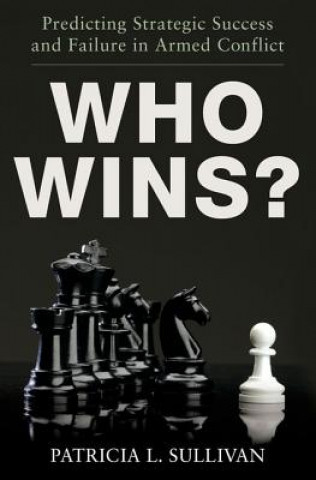
Könyv Who Wins? Patricia Sullivan

Who Wins?

Predicting Strategic Success and Failure in Armed Conflict

Nyelv: Angol
Kötés: Puha kötésű
Elérhetőség: Beszállítói készleten
Küldés 10-18 napon belül
16 549 Ft
Despite their immense war-fighting capacity, the five most powerful states in the international syst...

Információk a könyvről

Nyelv
Angol
Kötés
Könyv - Puha kötésű
Kiadva
2012
oldal
192
EAN
9780199878352
ISBN
0199878358
Enbook ID
04536469
Súly
262
Méretek
157 x 233 x 12

Teljes leírás

Despite their immense war-fighting capacity, the five most powerful states in the international system have failed to attain their primary political objective in almost 40% of their military operations against weak state and non-state targets since 1945. Why are states with tremendous military might so often unable to attain their objectives when they use force against weaker adversaries? More broadly, under what conditions can states use military force to attain their political objectives and what conditions limit the utility of military force as a policy instrument? Can we predict the outcome of a war before the fighting begins? Scholars and military leaders have argued that poor military strategy choices, domestic political constraints on democratic governments, or failure to commit sufficient resources to the war effort can explain why strong states lose small wars. In contrast, Who Wins? by Patricia L. Sullivan argues that the key to understanding strategic success in war lies in the nature of the political objectives states pursue through the use of military force. Sullvian does not deny the importance of war-fighting capacity, military strategies, or resolve as determinants of war outcomes. But she provides both a coherent argument and substantial empirical evidence that the effects of these factors are dependent on the nature of the belligerents' political objectives. The theory's predictions about the conditions under which states are able to attain their political objectives through the use of military force are tested against the most widely accepted alternative explanations of war outcomes with an abundance of historical data on violent conflicts. The results support Sullivan's argument and challenge both existing theories and conventional wisdom about the impact of factors like military strength, resolve, regime type, and war-fighting strategies on war outcomes.

Érdekelheti

The Editor

FRANKLIN SARA B
4 330 Ft

The Missus

E L James
3 254 Ft

Unquenchable Desires

Udaigiri Amravathi
5 054 Ft
26 076 Ft
13 361 Ft
4 772 Ft
7 317 Ft

Ancient Greeks

Alexandra Villing
6 652 Ft
31 160 Ft

Azok a vásárlók, akik ezt a könyvet megvásárolták, a következőket is megvásárolták