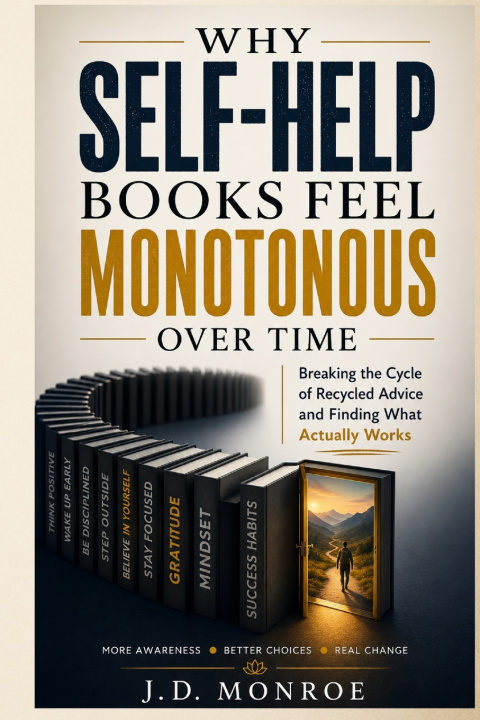
Many readers of self-help books notice the same experience: a new book arrives with real hope, and within a few chapters, familiar ideas reappear in different language. This book examines why that happens and what a reader can do about it.
The first half looks at the causes behind the repetition: how publishing schedules and search-driven titles shape what gets written, why a moment of clarity is often mistaken for lasting change, and how busy, well-intentioned habits like journaling and highlighting can substitute for actually testing an idea. None of this is presented as a personal failing. It is treated as a structural pattern common across the category.
The second half turns to practical use. It identifies a small number of well-supported mechanisms that reappear across many books under different names, offers a short set of questions for evaluating a new book before committing time to it, and closes with a method for building a personal, tested record of what actually works, rather than starting over with each new release.
Each chapter ends with a short, practical exercise meant to be tried, not just read. The book does not promise a complete transformation. It offers a clearer way to understand a familiar pattern and a small set of tools for reading this category with less repetition and more use.