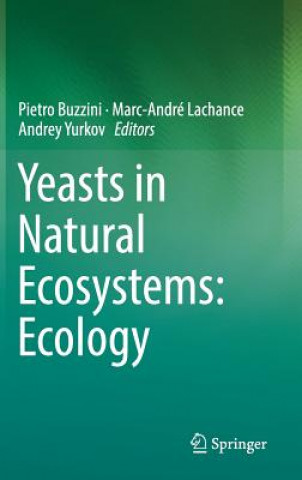
This book presents an up-to-date review of the ecology of yeast communities in natural ecosystems. It focuses on their biological interactions, including mutualism, parasitism, commensalism and antagonistic interactions, and is closely connected with the volume Yeasts in Natural Ecosystems: Diversity by the same editors. All of the chapters were written by leading international yeast research experts, and will appeal to researchers and advanced students in the field of microbial ecology.The ecological sciences study the chemical, physical and physiological properties of organisms in the context of their environment, and describe how a habitat can be colonized by organisms. However, the colonization of and persistence in a given habitat also depends on the interactions among different organisms. Each taxon (genus and species) can constantly modify the environment through its own metabolic activities, turning its habitat into a dynamic system. Yeasts are the smallest eukaryotic organisms belonging to the kingdom of Fungi; they do not form a monophyletic group but are distributed across the phyla Basidiomycota and Ascomycota and exhibit a heterogeneous nutritional profile and an extraordinary ability to survive and grow under a wide range of environmental and ecological conditions characteristic of natural ecosystems.