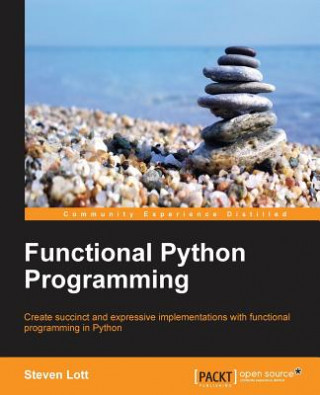
Könyv Functional Python Programming Steven Lott

Functional Python Programming

Szerző: Steven Lott
Nyelv: Angol
Kötés: Puha kötésű
Elérhetőség: Beszállítói készleten
Küldés 8-11 napon belül
26 795 Ft
Create succinct and expressive implementations with functional programming in PythonKey Features:Imp...
Információk a könyvről

Szerző
Nyelv
Angol
Kötés
Könyv - Puha kötésű
Kiadva
2015
oldal
360
EAN
9781784396992
ISBN
9781784396992
Enbook ID
03202721
Súly
678
Méretek
237 x 196 x 24

Teljes leírás

Create succinct and expressive implementations with functional programming in Python


Key Features:

  • Implement common functional programming design patterns and techniques in Python
  • Learn how to choose between imperative and functional approaches based on expressiveness, clarity, and performance
  • Apply functional Python to common Exploratory Data Analysis (EDA) programming problems


Book Description:

Python is an easy-to-learn and extensible programming language that offers a number of functional programming features. It's ideally suited to a number of applications in the broad space of data science.


This practical guide demonstrates the Python implementation of a number of functional programming techniques and design patterns. Starting with a general overview of functional programming concepts, you will explore common functional features such as first-class and higher-order functions, pure functions and more, and how these are accomplished in Python. Additionally, you will cover how common functional optimizations can be handled in Python. You'll also explore data preparation techniques and data exploration in depth. Moving on, you will learn how the Python standard library fits the functional programming model. The book concludes with a look at the PyMonad project and some larger examples.


By the end of this book, you will be able to understand what functional programming is all about, its impact on the programming workflow, why it's important, and how to implement it in Python.


What You Will Learn:

  • Use Python's generator functions and generator expressions to work with collections in a non-strict (or lazy) manner
  • Utilize Python library modules including itertools, functools, multiprocessing, and concurrent.futures for efficient functional programs
  • Use Python strings using object-oriented suffix notation and prefix notation
  • Avoid stateful classes with families of tuples
  • Design and implement decorators to create composite functions
  • Use functions like max(), min(), map(), filter(), and sorted()
  • Write higher-order functions


Who this book is for:

Érdekelheti

Fascists

Michael Mann
12 003 Ft

The Elemental Oracle

Stacey Demarco
7 381 Ft
7 841 Ft
8 770 Ft
3 483 Ft
8 090 Ft
5 273 Ft

Power

Michel Foucault
5 713 Ft

Lost in Math

Sabine Hossenfelder
5 581 Ft

Haikyu!!, Vol. 43

Haruichi Furudate
3 483 Ft

Persona 5

Pie International
11 309 Ft

Permission to Feel

Marc Brackett
6 466 Ft

Capturing the Devil

Kerri Maniscalco
5 757 Ft

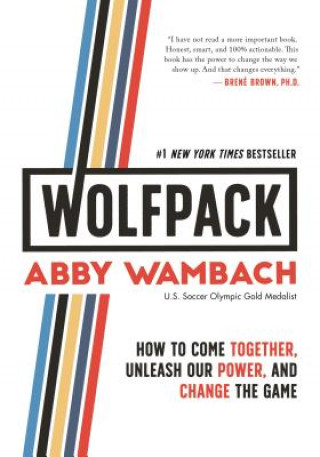
WOLFPACK

Abby Wambach
5 537 Ft

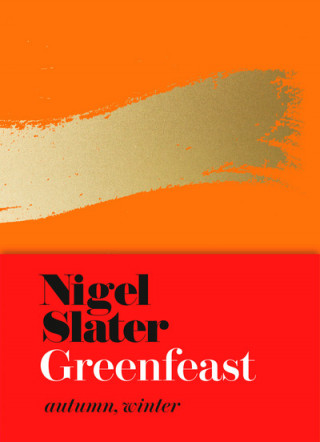
Greenfeast

Nigel Slater
7 841 Ft
2 788 Ft