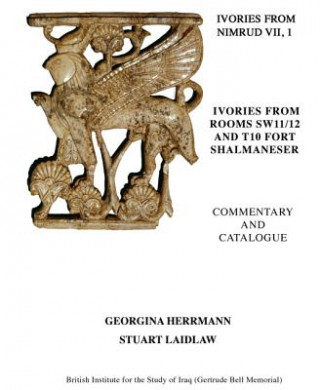
Könyv Ivories from Nimrud (1949-1963) VII, 1 and 2 Stuart Laidlaw

Ivories from Nimrud (1949-1963) VII, 1 and 2

Szerző: Stuart Laidlaw
Nyelv: Angol
Kötés: Kemény kötésű
Elérhetőség: 50 % esély
Keressük az egész világon
74 373 Ft
The Lost Art of the Phoenicians Fifty years have passed since the British School of Archaeology in I...
Információk a könyvről

Szerző
Nyelv
Angol
Kötés
Könyv - Kemény kötésű
Kiadva
2013
oldal
676
EAN
9780903472296
ISBN
0903472295
Enbook ID
02292758
Súly
4062
Méretek
312 x 253 x 51

Teljes leírás

The Lost Art of the Phoenicians Fifty years have passed since the British School of Archaeology in Iraq raised the last ivory from the soil of Fort Shalmaneser. Literally thousands were found, many of which have already been published in Ivories from Nimrud I-V, while VI recorded the outstanding pieces from the North West Palace. Ivories from Nimrud VII, Ivories from Rooms SW11/12 and T10 completes the publication of the assemblages in the Fort, as far as records permit. The ivories of Room SW11/12 are similar in character to those of Room SW37 and probably represent another consignment of booty, while those of T10 in the Throne Room block include pieces from all four traditions, as well as some entirely new ones. With the primary publication completed, it is now possible to look at these remarkable ivories as a whole rather than studying them by provenance, as is discussed in detail in the Commentary. Not surprisingly, it immediately becomes apparent that the majority can be assigned to the Phoenician tradition. There are at least twice as many Phoenician ivories than the other Levantine and Assyrian ivories. They form therefore an incredible archive, recording the lost art of the Phoenicians, long famed as master craftsmen. The Phoenician ivories can be divided into two; the finest, the Classic Phoenician, often embellished with delicate, jewel-like inlays, and the other examples still clearly Phoenician in style and subject. While the Classic pieces were probably carved in a single centre, possibly Tyre or Sidon, the others would have been carved in a variety of different Phoenician centres, located along the Mediterranean seaboard. Designs on Syrian-Intermediate ivories are versions of some Phoenician subjects, employing different proportions and styles. They may represent the art of the recently-arrived Aramaean kingdoms, copying their sophisticated neighbours, while North Syrian ivories are entirely different in subject and character and derive from earlier Hittite traditions. The ivories found at Nimrud present a unique resource for studying the minor arts of the Levantine world.

Érdekelheti

Dangerous Meeting

Martin Popoff
8 240 Ft

Untitled 4825

MACKESY CHARLIE
8 194 Ft

MacDonald Gill

Caroline Walker
13 228 Ft

Bunny

Mona Awad
3 558 Ft

Drawing Fire

Brummett Echohawk
9 915 Ft

Prices, Profits and Rhythms of Accumulation

Gilbert Abraham-FroisEdmond Berrebi
32 027 Ft

Dakota's Reading Log

Martha Day Zschock
3 294 Ft
3 294 Ft

Mobs in the Mine

Winter Morgan
3 633 Ft
139 035 Ft
5 827 Ft

Azok a vásárlók, akik ezt a könyvet megvásárolták, a következőket is megvásárolták